Friday, February 27, 2015

Provence

PROVENCE

Provence always comes to me as a culinary capital of France with fantastic seafood, truffles, and heavy influence from its Mediterranean neighbors.  I would also be remiss if I did not give props to herbs like thyme, sage, rosemary, basil, savory, fennel, marjoram, tarragon, oregano, bay and above all, Lavender.  I have never been, but when I think of it, it seems to be the place of my culinary dreams.  I have frequently said in a wine cave in Italy, or a wine cellar in Napa, if you had to die, this would be a beautiful place to do so.  This is the same way I have always envisioned Provence is, but with food.

What I did not fully imagine, is the same could be true of wine.  Duh, a place with good food also finds itself immersed in wine culture as well.  In Provence however, it was the wine that came first.  This wonderfully beautiful city perched above the Mediterranean, was founded to support, of all things, the wine trade.  The Romans planted grapes here in 125BC, and built the city to be able to ship wine back to the motherland.  Upon the fall of the Roman empire, there was a time that Provence stops making wine,.  Later the church took over production, but it was not until the Mediterranean beauty starts bringing these wonderful creatures called tourists, and the wine industry starts to boom.

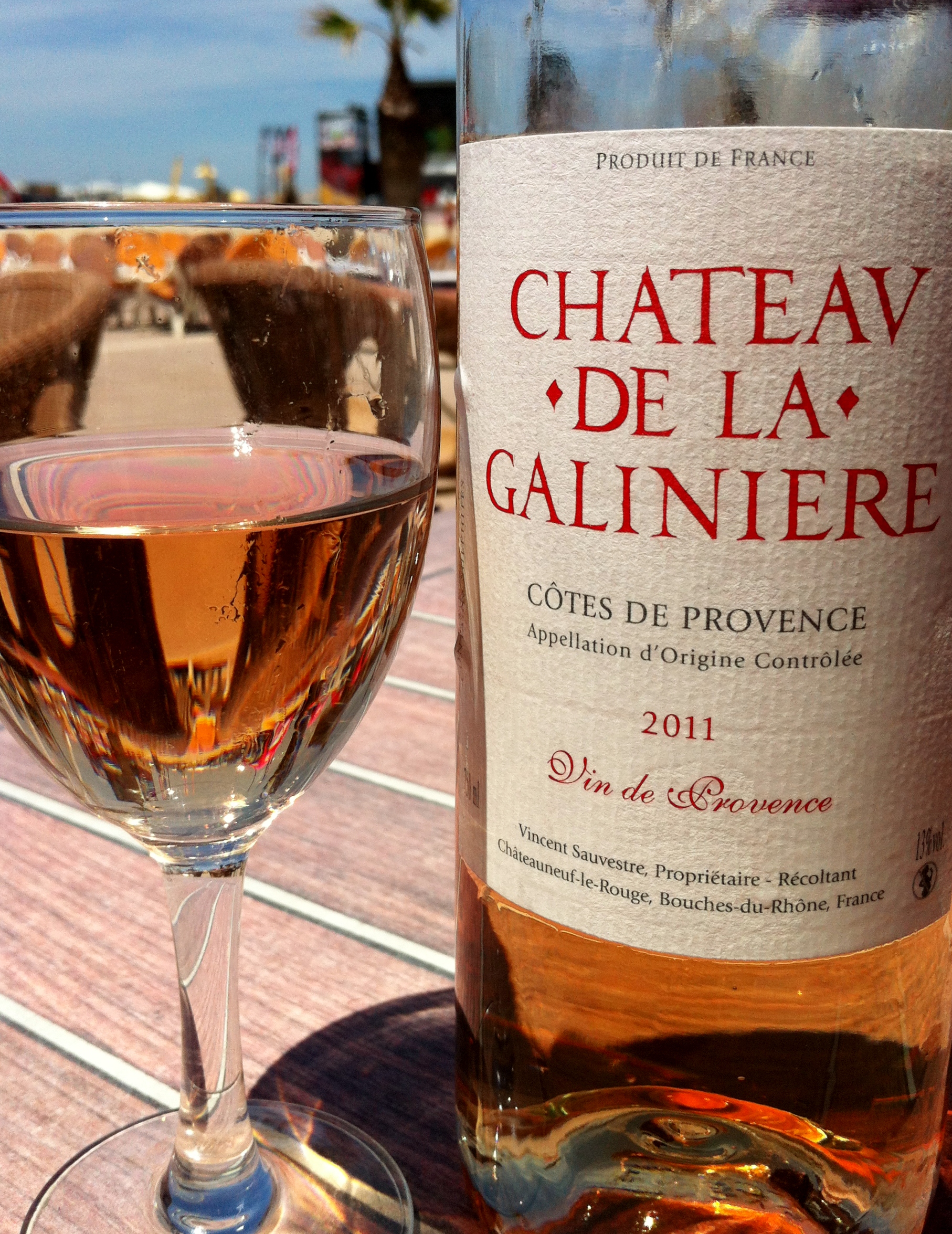
The biggest appellation is called Provence AOP.  Over 75% of the wine production of the region is Rose'.  The wines of this region must be a mix of at least two types of grapes.  Those may be chosen from Cinsault, Grenache, Morvedre, Syrah, and a local grape called Tibouren which locals say smells like herbs d' Provence.  This herbal scent will often be described as a nose of garrigue.  Frequently served in hourglass bottles, these rose wines are good provincial dry pink wines, but are not great wines in a classical sense.  However, if you are sitting in a Mediterranean climate with a cold one in your hand, looking at the ocean, well, you could see that it would not suck in any way.  It might even make the wine taste fabulous.

Unlike the provincial rose, a wine that is a star is a red wine that comes from Bandol AOP.  Bandol does produce rose' wines but the wines to take note of are the REDs.  The Bandol red must be a minimum of 50% Mourvedre, a grape that tastes fantastic if you have not had one, but may be paired with up with Grenache, Cinsault as well as less frequently with Syrah and Carignan.  Mourvedre is a hard grape to grow very difficult grape to grow as it is susceptible to a lot of pesky agricultural issues.  It produces wines that have a lot of character with a high degree of tannins.  These wines therefore need time in the barrel and are not able to be released until 18 months of aging, and frequently require much more aging time in the bottle to tame the wild beasts that they are.  Speaking of wild beast, you will often hear that these wines are plummy, dense, and frequently are described as smelling like or of animals. YUMMMMMMMMMMM!

Another interesting area of the region is the Coteaux d'Aix-en-Provance AOP and within it the sub-appelation of Baux de Provance AOP.  This area is as interesting for its politics as it is for its wine.  Vignerons in the area have been trying to mandate organic production but have been unsuccessful in doing so.  They make rose, red and recently added the ability to make reds under this AOP.  the grapes are as follows:  Grenache, Syrah and Cinsault for reds, and Grenache Blanc, Clairette, Cermentino, and Roussanne for the whites.  Interestingly, the most famous maker in the area, Les Baux de Provance got impacted by a change in rules in 1995 to insist on Mediterranean grapes only and must bottle its Cabernet under the vin de pays.


Other AOPs in the area include Cassis (75% whites) produces wines in limestone soil from Clairette, Marsane, Ugni blanc and Sauv Blanc. Palette which produces 3 colors in similar quantities.  Reds from this area are predominately grenache and Mouvedre and may contain Cinsaut.  Whites are at least 55% Clairette, but can include a party of others as well.  Finally,  Bellet which produces all 3 colors, but its street cred comes from its whites.   The settlers here are of Italian decent and they frequently use Vermentino known locally as Rolle.

The geology of Provence is largely sand and sandstone along with granite.  Limestone is frequently found in the best vineyards.  Additionally it is usually warm in the summer with mild winters with plenty of sun to ripen grapes. 

Friday, February 20, 2015

Rhone Valley

RHONE VALLEY

Wander into a French Restaurant anywhere in the world be it France, or Highland Park, Illinois USA, if you know wines and what goes well with provincial cafe food, you are likely to order a Cote.  Not a COKE, but a Cote.  If you are in-the-know this is the way to indicate to the server that you would like a Cote du Rhone.  These wines are Ubiquitous in french cafes and are generally a nice value wine.  With that, comes the wonderful reputation of being average at best cafe wines.  They won't excite or offend anyone.  While this is true for many wines in the region, the Rhone Valley goes way beyond the Rhone hills, and offers both great values as well as exceptional, interesting wines that people are happy to sit and talk about forever, and ever.

I remember my first experience with the Rhone valley beyond Cote-du-Rhone.  I was in, of all places, Napa Valley and we decided to head over to a restaurant called Tra-Vigne where a young and interesting hot-shot chef was doing some incredible things.  The chef's name is Michael Chiarello, of TV fame, but this was before all of that.  My wife and I ordered a paparradelle with a lamb ragu that was screaming for a glass of wine.  When the Sommelier came over to chat, he said:  

Brian:  "Hi, I am Brian, and I will be your WINE GUY tonight."  

Me: "Wine guy, are we to young for you to be a sommelier?"
Brian: "nope, I am too young..."  
We all laughed, and we told him that we would not be having wine with dinner because we had been drinking CA wines all day.
Brian:  "What I am hearing you say is that you don't want anymore California wine today, and you don't want a lot of any wine, but I cannot let you have that pasta without any wine at all.  That would be a crime!"

God Bless that man.  he was right.  What he brought us was an old Vieux Telegraphe Chateauneuf du Pape half bottle to go with dinner.  He said it was a wine-nerd's wine.  Brian told us that he and his buddies spend hours pouring this wine and sipping it, watching it change in the glass, and debate its flavors and smells over the course of the evening.  IT WAS GREAT.  I had never had anything like it.  I did not even know it was from the Rhone Valley.  I just knew I wanted more of it.  More on Chateauneuf in a bit.

Back to the Rhone.  It can easily be separated into the Northern and Southern Rhone.  The two regions do not touch at all in fact, and if they did not share the same river aptly named the Rhone, they would likely be considered two totally separate AOPs.  Geographically, they are separate, They grow different grapes, the soil make up is different, and the climate is vastly different.  Finally, the North makes some of the best wines of the region, but only accounts for a paltry 5% of the total yield.

Lets take climate first.  The north is more of a continental climate.  The North has more varied seasonal change, a lot more rainfall, and fewer daily hours of sunlight giving the grapes longer hang time.  The Northern Rhone also has strong winds called Mistrals that blow so hard that many of the trees in the area lean southward due to the wind's strength.  While this can strip the vines of their fruit, it also serves to ensure that the rains do not bring with them mold or rot.

The soil of the northern Rhone is made up of Schist and granite.  Many of the vineyards are on hills that hug the river, and almost defy gravity in their ability to stay up.  The three AOPs with the steepest slopes and therefore the best wines are Hermitage, Cote-Rotie and Condrieu.

The top grape grown is by far Syrah.  Many feel there is no better Syrah anywhere in the world then in the norther Rhone.  These wines are full-bodied, savory and have flavors of Meats, smoke, olive, lavender and peppercorn.  Some say rubber and cigars as well.  

Cornas AOP bottles Syrah as a 100% varietal wine while the other appellations allow a small percentage of white grapes to be blended in.  Ironically, those white grapes deepen the red color of the wine and stabilize the tannins.  Cote Rotie will add up to 20% Viognier (One of my favorite white grapes) while the remaining areas add Marsanne and Roussane.  These grapes are almost always co-fermented in whole clusters and many times include stems.

Steep Cliffs of Cote-Rotie
At this point I think it is worth recognizing some of the communities in the Rhone.  We will start in the North with Cote Rotie (Burnt Cliffs).  These are the steepest vineyards of any in France.  I am not sure if it is called the burnt cliffs because of the sun, or because of people falling down and leaving blood in the soil.  At times the gradient is 55 degrees or more, and all of the cote's vineyards are harvested by hand.  Talk about a hard day's work.  

The Cote-Rotie is broken into two parts, the Cote Brune (Brunette) and Cote Blonde (I will assume you can translate), allegedly given to the two daughters of  some important dude.  One blonde and one brunette.  Some say the soils are darker on the brunette side.  Most importantly, the Blond side makes lighter more elegant wines, while the brunette side makes more assertive, bolder wines.  This area rivals some of the first growths of Bordeaux in their beauty and complexity.  La Mouline, La Turque and La Landonne are among three of those places.

Hermitage, so named because of a Hermit who lived in a chapel in the area, is another community worth noting.  They also make an exceptional Syrah blended with up to 15% rousane and Marsane grapes, as well as a beautiful white from Rousane (Acid) and Marsane (Richness, think Marzipan).  there are 4 producers who dominate the area.  They are Negociants Delas, M. Chapoutier, Jaboulet, and Jean-Louis Chave who is the only major grower who bottles his own wine.  (This part is thanks to my friend Jim)  If you don't want to pay Hermitage prices, you can also seek wines made in its little brother AOP called Croze-Hermitage.  These wines are less predictably great, but the great ones take Syrah into the bacon flavored realm, and who would ever say no to bacon.

Cornas is famous because they only allow Syrah in their wine.  No blends here.  These are wines that need to be laid down for years.  They are almost unapproachable in their early years.  Also notable is that Cornas is the warmest region in the north due to the hill shielding it from the Mistral, and the fact that the land is made largely of uncovered granite (Gore).

St-Joseph is a lesser region in the north so I am going to skip it.

Condrieu AOP is a white ONLY region.  As I mentioned before, right now my favorite white is Viognier.  Condrieu is just south of the Cote Rotie.  The wine is Honeyed with a lusciousness and finishes with a floral bouquet.  It is finished with Oak, and MLF to give a creaminess to the winemakers taste.  Sometimes people will say that Viognier is the more interesting, sultry sister of Chardonay.  Graaaaaaawwwwwwllll.

St-Peray and Chateau-Grillet are also AOPs but less interesting.

The last region to pay tribute to is along the Drome river.  It is actually 4 sub appellations Coteaux de Die AOP, Cremant de Die AOP, Clariette de Dia AOP and Chatillon-de Diois AOP

Clairette de die provides 2 types of sparkling wines, method traditionnelle (See how Champagne is made) and Methode Dioise Ancestral which must contain 75% Muscat a Petit Grains (Weird grape).  They are bottled before fermentation is complete, disgorged, and hit with a dosage of 35g/l making it a semi-sweet wine.  Traditionnelle is basically Brut in style.

Chatillon-en-Diois makes Gamay based reds, rose's and whites from Aligote and Chardonnay.

Moving to the Mediterranean climates of the southern Rhone, a lot shifts.  First, it is WARM.  One can dream as it was -7 degrees Fahrenheit today when I woke up in sunny Chicago.  The vineyards fan out from the river and cover far more geography.  Granache is the predominant grape but Mourvedre and Syrah also play their parts.  Some communities allow for up to 19 different grapes in the blends that they produce.  Unlike the north, this is a region that relies on the blend to make a balanced and beautiful wine.

Chateauneuf de Pape Vineyard with Galets
The mistral blows so strong through the south that some farmers are forced to plant the vines on an angle.  The soil is made of deposited limestone over sand, gravel, and clay all left by the river over the years.  Finally, large stones are found in some of the region called Galets, and are most notable in Chateauneuf-du-pape.  These Galets were deposited in the ice age by the glaciers and they are thought to store heat for the cool nights.  This may account for the high alcohol content of the wines in the region.

I will break the region into a few parts.  First, we will start with Chateauneuf-du-pape (Chateau of the new pope)since it started my love for the region so long ago.  7 notable producers make some of the best wines of the region.  Chateau Rayas, Chateau de Beaucastle, Michel Chapoutier, Domaine du vieu telegraphe (Mmmmm), Chateau La Nerthe, Domaine Charvin, Domaine de Marcoux.

The region produces both red and white wines and has 13 accepted varieties to blend from.  Grenache is usually the principal variety in the red wines of the region, however, Chateau de Beaucastel Rouge is dominated by Mourvedre and uses every one of the authorized varieties.  Chateau Rayas is almost always a 100% Granache.  The minimal ABV in Chateauneuf is 15.5% with many reaching 15% or higher.  Giddeyup!

The 13 grapes that can be used are as follows.  Deep breath... Granache (Noir, Blanc, Gris)
Mourverdre, Syrah, Cinsault, Counoise, Picpoul (Noir/Blanc/Gris)
Terret Noir, Bourboulenc, Clairette/Rose, Roussanne, Vaccarese, Picardan, Muscardin.   (BREATHE)

Gigondas is similar to CDP, and a lot cheaper, as is Vacqueyras.  Both of these villages used to be part of the generic Cote-du-Rhone AOP.

Cotes du Rhone AOP is the largest appellation.  Over 2/3 of the production of the Rhone is produced in this AOP.  It is also the wine I discussed at the beginning that is found all over the restaurants and cafes of France.Cotes du Rhone Cillages AOP is a superior designation for red, white and rose wines from a smaller area within the Rhone.  There are 18 appellations that attribute their designation the the CDR-Villages AOP.  Major grapes grown here include Grenache, Mourvedre and Syrah.

Beaumes-de-venise and vinsobres AOP are new appellations that joined in 2005 and 6 respectively.  They produce a wine that has a minimum of 50% Grenache with high alcohol.  Lirac is a small community with a dubious past.  They produce medium quality white, red and rose wines, but in 1863, Lirac is thought to have been the gateway for phylloxera getting into France.  Phylloxera is a devastating parasite that wiped out many of the vines of France.

Tavel makes only rose wines made from Grenache.  These wines are dry and said to be age-worthy.

Vin Doux naturals, Rasteau and Muscat de Beaumes de Venise are fortified wines, but the two communities also make wines in a traditional manner.  If you see AOP, know it is traditional.  If you see VDN, know it is similar to a port.  These wines are fortified with Brandy.

Clairette de Bellegard makes wines only from a grape called Clairette and is known basically for that region alone.  Talk about marketing.


There are other small regions, but I will not go into those right now.

All-in-all, the Rhone Valley has wines that one could drink every day.  They are good, affordable, and go with most foods.  In a country like France, they are the go-to wines.  More interestingly, there are wines that are unforgettable.  Wines in the north from Cote-Rotie, and Hermitage as well as Condrieu.  And in the south, Chateauneuf-du-Pape among others.

Explore.  It is only wine.


Tuesday, February 17, 2015

Bubbly

CHAMPAGNE

One of my favorite children's books is a called A Beautiful Oops.  It is a book we read often to my two boys when they make a mistake that they see to be the end of the world.  Their mistakes can cause temper tantrums, disagreeable behavior, quitting, or just the inability to concentrate on the task at hand.  They will say something like, "EPIC FAIL" with attitude, and run away...  In the book,, author Jamie Lee Curtis, yep same one, says that we should think of a mistake, as an opportunity to make something beautiful.  She and her illustrator show countless examples of ripped pages, spills, ink stains, and they use the shape to make animals, words, and other inspiring creations.

Why start this article about Champagne with a story about a kids book?  Great question!  Champagne is perhaps the most beautiful oops ever in the wine world.  It is proof, that a mistake should be looked at as an opportunity to make something beautiful.  The originators of this magical elixir took the book to heart.  Yeah, I know, the book wasn't around back then, but the message most certainly was.  What comes out of the story is the drink people turn to for celebration.  Perhaps, what they are celebrating is not only a wedding, or a birth of a child, or winning the world series, but also the celebration of the triumph of the originators of the first modern Champagne as a modern triumph over an almost certain "EPIC FAIL".  They just don't know it...YET.

250M bubbles per bottle of Champagne
Our fairytale begins in Champagne France c. 1550s when sparkling wine was made accidentally.  It gets very cold in the region, and sometimes people would bottle wines before the fermentation was fully complete.  When the spring came, the bottles would warm, and the fermentation would begin again.  When yeast ferments, it changes sugar into alcohol and CO2, and thus bubbles.  OOPS, We have champagne... Well sort of.  In reality you have sparkling wine, but, due to the sparkle, you also had exploding bottles, and popping corks, and you would also have fine lees (Sediment produced by dying yeast falling to the bottom of the barrel).  That beautiful clear bubbly that we are all used to was certainly not what was being produced in the 1500s.  Fast forward to the 1660s when the ENGLISH, not the French, were able to make glass that would withstand the pressure from the fermentation, and in the 1800 when the Muselet (muzzle) was developed to keep the cork in the bottle where it belongs.  Additionally, they were able to figure out how to make the lees come to the top of the bottle and remove it after secondary fermentation was complete to give us the clear liquid Champagne that we currently know and love.  

Why did the original makers decide to go all-in on bubbles.  Their wines were not at all good.  Compared to the wines that their neighbors were making, they were thin and acidic largely due to the fact that they did not get enough sunny days to mature the grapes like their neighbors did in Bordeaux or in Burgundy.  As a result, they tried something different.  Something that would pay off in spades.

All Champagne is made from a combination of 3 grapes.  Pinot Noir and Pinot Meunier which are both red grapes, and Chardonnay (White).  Why is it white if it is made from red grapes?  First, not all Champagne is white.  And not all Champagne is made using red grapes.  When it is white,  they take the red grapes and press them in a certain fashion to remove the juice from the skins quickly.  Since the pigment in red wine come from contact with the skins, if the juice never touches the skin, all grapes produce "white wine".  Rose Champagne allows the red grapes to touch the skin for a little while, and Blanc de Blancs is made only from Chardonnay.

King Dom Perignon
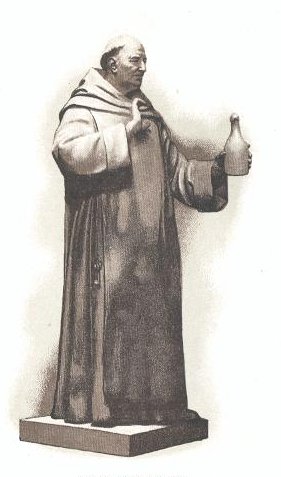
Which leads us nicely to the story of Mr. Dom Perignon himself.  Yes it is a great example of Champagne, yes it is correctable and expensive, yes it is yummy, but did you know He was an actual person.  A monk in fact, and he was in charge of the wines at the Abbey d' Hautvilliers.  Dom, and I can call him that because we are on a first name basis, was the first person to realize that the spring fermentation was a blessing, and one that the region could take advantage of, and not the curse that many thought it was.  Mr. P did a few things for the region.  First, he was the first to blend wines from different vineyards (Assemblage) to increase the flavor.  Second, he realized that if one presses rapidly, the wines would remain white.  So Mr. P is like the king of our fairytale.  Long live king Dom.  Foreva!

There are 9 styles of Champagne that you should know about.  Non-Vintage (NV) is generally in a Brut style.  It makes up three quarters of total production.  The house blends wine from multiple years to achieve consistency across years.  the second is Vintage.  100% of the blend must come from the year stated on the bottle.  In any one year however, the house is only permitted to use 80% of the wine it produces.  The rest must be held for blending in other years.  Most houses only release a vintage during fantastic years.  The vintage champagnes are also usually brut in style and can be aged for a decade or more.  Blanc de Blancs is always 100 percent Chardonay.  They can be both vintage and non vintage.  these beautiful bottles can be aged for decades, and take years to develop past their rough beginnings.  The fourth type is Blanc de Noirs.  These are white Champagnes produced only from red grapes.  These are more weighty and masculine wines that lack the finesse and elegance of Blanc de Blancs.

The finest and most prestigious of the offerings is the prestige Cuvee (Tete de Cuve.These are usually vintage labeled, but not always.  They are also frequently aged for years prior to their release.Not all houses produce a prestige offering, and even those that do, often only produce in a fantastic year.  These wines can be Blanc de Blancs, Blanc de Noir, or rose.

Single vineyard champagne are produced both by large houses and smaller growers.Clos de Goisses is perhaps the benchmark for these types of wines.  Single vineyard Champagnes stand in stark contrast to the philosophy of blending that is prevalent in the region.

The seventh style of Champagne is Special Club Prestige Cuvee which originated in  1971.  This is a community of producers that promote their prestige cuvees with identical packaging, so that they can share in the cost of production and promotion.

The last two include Rose Champagne.  these can come in vintage, NV, and Prestige cuvees.  The rose is almost always achieved by blending white wine with red wine.  Champagne is the only region in France that allows the blending of reds with whites.  Rose wines are the most expensive of all Champagnes.  Finally Cremant de Champagne is a half sparkling wine.  A spritzer if you will.  You will hear them referred to as creaming as opposed to sparkling.

Champagne can also come with different levels of sweetness, these include in ascending order of sweetness:
1.  Brut Nature (less than 3g/l
2.  Extra Brut  (0 to 6g/l of sugar)
3.  Brut (6-12g/l)
4.  Extra Dry (12-17g/l )
5.  Dry/SEC (17 to 32g/l)
6.  Demi-Sec/Half dry (32 to 50g/l)
7  Doux/Sweet (50+)

Houses are aloud to be +/- 3g per liter variance on what is listed on the label.

You can still find still bottles from the region as well.  Coteaux Champenois are still red and white wines, while Rose des Riceys are still rose wines coming from the community of Riceys.

Due to the weather Acid levels can remain quite high.  Anyone who has tasted Champagne can attest to that.  This is why Champagne pairs so well with so many different foods.  Winters can be cold, and the average temperature hovers around 52 degrees F.Soils are Belemnite (Fossilized sea creatures).  These soils reach very deep in many parts of the AOP.  This allows for a lot of water to reach the vines, storage and reflection of heat, and it allows for caves to be dug to store the bottles that remain at a constant temperature of 52 degrees.

There are 17 Grand Cru villages in Champagne.  This includeAmbonnay, Avize, Ay, Beaumont-sur-Vesle, Bouzy, Chouilly, Cramant, Louvois, Mailly-Champagne, Le Mensnil-sur-Oger, Oger, Oiry, Puisieulx, Sillery, Tours-Sur-Marne, Verzenay, Verzy.  There are 44 Premir Crus, and the rest of the AOPs are unclasified.

Prices of Champagne grapes are fixed.  Every year the price and yield are determined by the Civic and the INAO.  The Champagne Houses (Wineries that make Champagne) will pay a persentage of the set price based on where the grapes come from.  Grand Crus are priced at 100% of the set price, Premirs are 90-99% and Not classified at 80-89%.  Champagne houses negociate at the time of pressing for the price of the grapes.

After the harvest and the primary fermentation, the wine is bottled after adding sugar, yeast and nutrients, which ensures the secondary fermentation (Prise de Mousse)  The additions are called the "Liqueur de Triage).  After secondary fermentation is complete the maker allows the Lees to sit in the bottle for a mandatory 15 month period of time.  This helps flavors to develop and allows the Champagne to mature.  For vintage Champagne the time on lees must be at least 3 years, but many spend even more time than that.

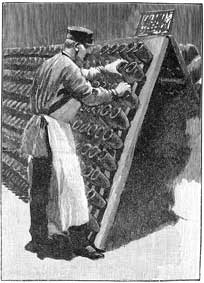
At this point one needs to remove the lees from the bottles.  this is done through a process called Remuage or Riddling.  The Remuer (Person who does the Remuage) turns the bottles methodically to dislodge the dead yeast cells at the bottom of the rack.  Slowly through turning, the bottle will eventually be upside down (Sur Pointe).  When this happens, the yeast can be removed (Disgorged).  To do this, the Champagne house freezes the neck of the bottle to take out the yeast plug.

We are almost done.  At this point, a small amount of sugar may be added with some wine called the Liqueur de dosage, or the Liquer d' expedition.  Depending on the amount of this liquid added, will determine the sweetness of the wine (Brut, sec, etc.)

When this is done, the wine is corked and fitted with a muzzle (The wire thinga-ma-bob).  Afterwards, the bottle is shaken to ensure the Liqueur d' expedition is mixed, and to ensure that all of the lees have been removed.  After that, the label is put on the bottle and the foil is applied to the cork and muzzle.

As luck would have it there are also different types of Champagne producers.  I think they do this so that I will have more to memorize about a wine that I am not so crazy about in the first place.  I usually am the person at a wedding that will say cheers and clink glasses with some Cabernet while everyone else has Champagne.

The producers can be NM (Negociant Manipulant) who buys grapes from growers.  Some own a portion of their own grapes, and some not at all.  Many of these are big corporations with multiple labels housed under them.  RM (Recoltant Manipulant) is a grower who makes Champagne from estate grown fruit.  They must have 95% of the grapes coming from their own vineyards.  CM (Cooperative Manipulant) that represents a bunch of growers producing under one brand.RC (Recoltant Cooperateur)  These are a group of growers that vinify together but they label under their own house.  SR (Societe de Recoltants) see above but instead of a coop, it is a corporation set up by a union that causes the collective.  ND (Negociant Distributeur) these are middlemen and they distribute wine that they did not make.MA (Marque d Acheteur);  House brand, think generics in a grocery store.

I hope you enjoyed my story of the beautiful oops that is Champagne, and that you live happily ever after.  THE END!


Friday, February 6, 2015

Burgundy

Burgundy

When you talk to someone about Burgundy, he may use certain words to describe the wine that will remind you of how people talk about sex.  That is right, I said SEX.  I am not sure why, but they do,  it is true.  Almost everyone who has had very fine Burgundy wine will tell you afterwords, they needed a moment, or they stopped eating.  They had to focus on just drinking their wine, or they wanted to be alone with the glass... WEIRD, Right?  So if Burgundy is the kind of wine that is Sexxxxxxxxxxxy, why doesn't everyone drink it?  Why do we not have more people espousing it s appeal?  Why is it not something that you have experienced?  All good questions.  Frankly, while I am writing about the sex in a bottle that is Burgundy, I must admit, I myself am a fine Burgundy Virgin.  That is not to say I have not dabbled in Burgundy.  I have.  I just have not had the experience that would lead me to talk about wine in the way I have described others talking about it above.  So, why the disconnect?  Here is the skinny on Burgundy.  Burgundy is a place that makes some of the most talked about wines in the world.  Not only are the wines discussed, revered, objectified, and sexified (OK not a word, but you get the picture), but the Grad Cru and highly prized 1er Cru can sell for thousands of dollars.

But, and this is a BIG but, Burgundy is the one of the furthest north wine growing region that makes fine wines in the entire world.  Especially, fine red wines.  What does this mean?  It means that it is very difficult for the grapes to mature.  What that means is that while you might have a fantastic Burgundy from a Grand Cru vineyard in 2009, you might find the the following 10 years never produces ripe enough fruit to do it again.  Thus, people spend a lot of time, and a lot of money buying average Burgundy wines.  Why?  Why would they do that?  Why not just go to Bordeaux, or California, or to Portugal, and get a wine that is more predictable?  

It turns out that a rat will die if you give them a button to press that will cause them pleasure of the sexual variety.  They will press the button over and over and over again, forgetting about food, water and rat clothing... From what I can tell Burgundy is exactly the same way.  People are more than willing to suffer average wines from Burgundy, and keep pressing the Burgundy button in search of that 1 SEXXXXXXY bottle that a person might find in a year.

To make matters worse, even if you pick the right vintage, and the right bottle, Burgundy can go through an awkward phase.  Even the right bottle can have a bad hair day.  Think attractive people circa 1987 in their Zubaz pants and their bad glasses.  If you open the bottle then, it might not go so well, but if you are lucky enough to have waited, the wine might taste like sexy time.

This is the allure of Burgundy.  This is why a bottle of red is described as tall dark and handsome, or whatever floats your boat.  This is why the region has such a cult following.  This is why wine nerds can't help but talk about the wine like it has a life of its own.  This is why it has a sex in a bottle reputation.  Burgundy is all about place (Terroir), and a little baw-chicka-bow bouw, and the time it is opened.  No other region on earth has this reputation, complexity or allure.

It is important to note that with all of this talk about sex and wine, that Burgundy was first developed, farmed, and turned into a wine making region by the Catholic Church (IRONIC).  The Benedictine monks founded Burgundy, and noticed that different places created wines with different flavors and textures.  Therefor, Burgundy is all about PLACE.  the Grand Cru travels with a parcel of land and not with a family or a label like in Bordeaux. Since family laws used to dictate that a family must split its assets amongst its children evenly when parents die, it is not unusual for a grand Cru to be split, and made under similar names, but different conditions.  This makes finding the great wine that you have had in the past even more difficult.  There are people who study Burgundy for their lifetime and never get all of the information that they seek, so I will not pretend to be an expert, or even a beginner, or that I can even spell Burgundy at this point, but I will be happy to pass on a little of information that hopefully will serve you well with a pretentious Fracophile at a dinner party and give you a fact or two to point out his douche baggery one night.

For the purpose of this discussion, I will talk about three major regions of Burgundy.  First is Chablis, which has largely gotten a bad name in the United States.  The reason has NOTHING to do with the wine of this region,  rather the reason is because white jug wines that our grandparents used to drink were always called Chablis.  These wines were bad, and had not a single ounce of Chablis in them.  We need to get over that as a country and move on.  Chablis from Chablis are a beautiful food wine made from the darling of all white grapes...Chardonnay.  Frequently they are aged in Stainless Steel (un-oaked).  Due to the cold climate, the grapes mature slowly, and sometimes insufficiently leading to high acid wines.

As grapes develop, the acid content dips as the sugar content rises.  Since the grape matures slowly, the fruit does not lose its acid like it would in sunny California.  The Chablis wines are often described as having the flavor of lemon curd and frequently their mineral flavor is described as oyster shell.  I have never licked an oyster shell, so I will take their word for it.  The reason oyster shells are included in the description is that the Chardonnay in this region is grown in soil that has a white chalk that comes from age old oyster shells.  People like to think that the vines suck up those shells and put the flavor in the grapes.  NOTE:  They likely do not. There are 7 Grand Cru wines in Chablis.  These are the only wines from the region that sometimes get oak to age.  Many in the region believe that the Chardonnay grown here is too beautiful to ruin with oak.  The seven grand cru from Chablis are as follows:
Bougros, Les Preuses, Vaudésir, Grenouilles, Valmur, Les Clos and Blanchot.  Together they make up a whopping 3% of the total production of the region.

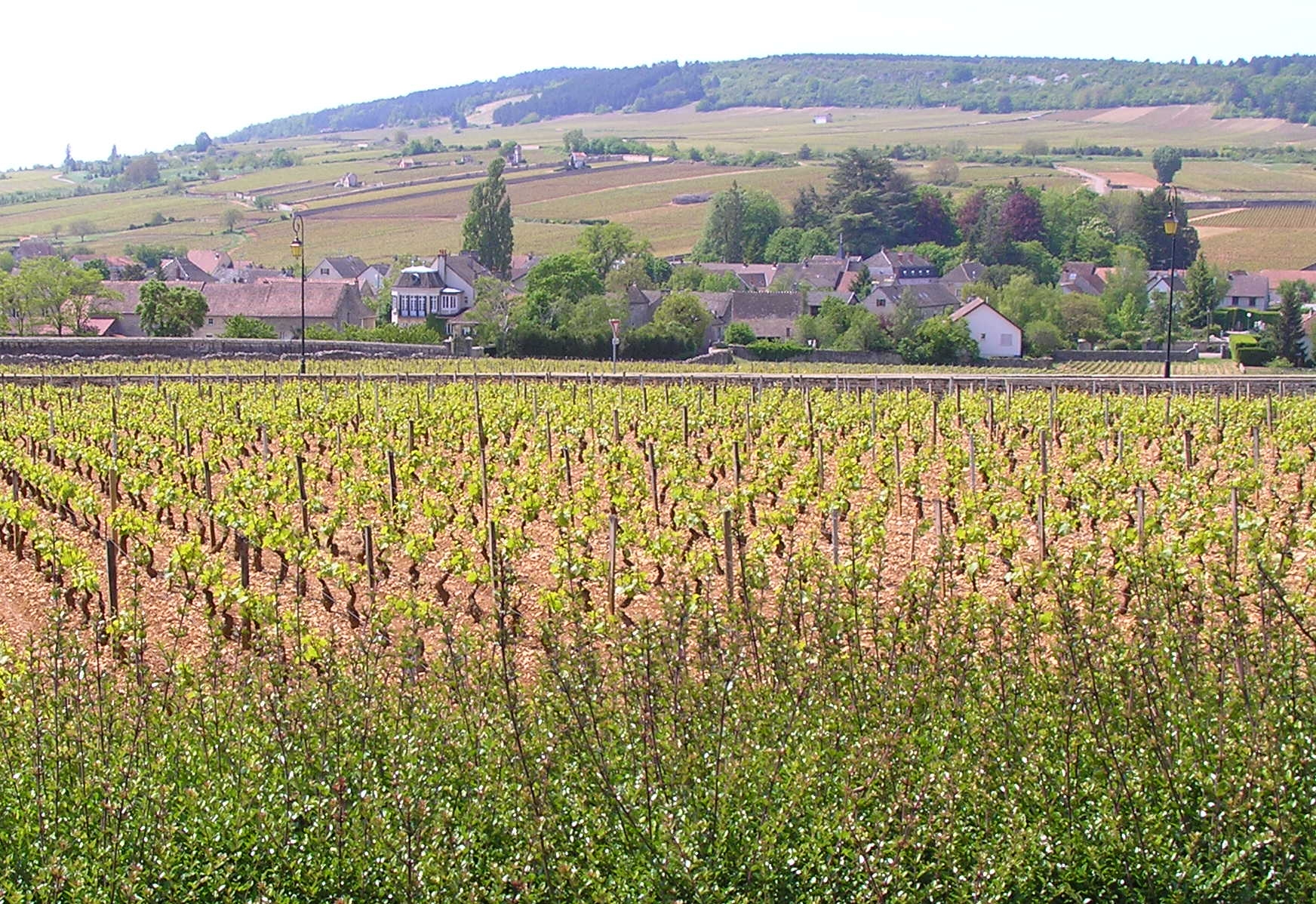
The next major region is the place dreams are made in Burgundy.  It is a region (AOP) with small hills or Cotes.  They used to be called the Cotes d' Orient because they point in that direction, however, as my teacher said in class, they have since dropped the "rient"  Now the hills are referred to as the Cote d' Or.  (Hills of Gold)  Likely the "rient"was dropped due to someone having great insights into marketing.  Who doesn't want to drink wine from a place called the hills of gold?  I certainly do.  The truth is, during great growing seasons, many a person would rather have a great Burgundy from this area than a brick of gold.  The Cote d'Or is broken into two parts.  In the north, and pictured above, is the Cotes de Nuits, which produces almost exclusively red wine, and almost exclusively made from the noble grape Pinot Noir.  In the South is the Cote de Beaune which produces some lighter reds higher in acid, as well as most of the fine whites from the area.  The hills here are mad up of limestone and the higher on the hill one goes, the more limestone.  As you get to the bottom of the hill you would fine higher amounts of clay.  Also, because soil is only one parameter, and weather and sun is so important in a cold climate, the spots on the hill that are grand cru, maximize sunlight.  therefore, grapes grown in the grand cru spots on the cote, are given the best chance to mature year in and year out based on the vines' exposure to the sun.  The people of Burgundy take place one step beyond terroir.  They talk about climat, a Greek word describing not only the place, but also the environment. 

Back to Burgundy...  We will start with the Cotes de Nuits, which as I mentioned mostly produces Pinot Noir based red wines.  You can remember this because Nuits means night.  Dark wine...Night... Ah, you are with me now.  A special thank you to my French speaking wife for that memory device.  I am not sure it will help me since it now requires that I learn and retain Nuits=Night, and that Night equals Red wine, but if it helps you, I am glad.
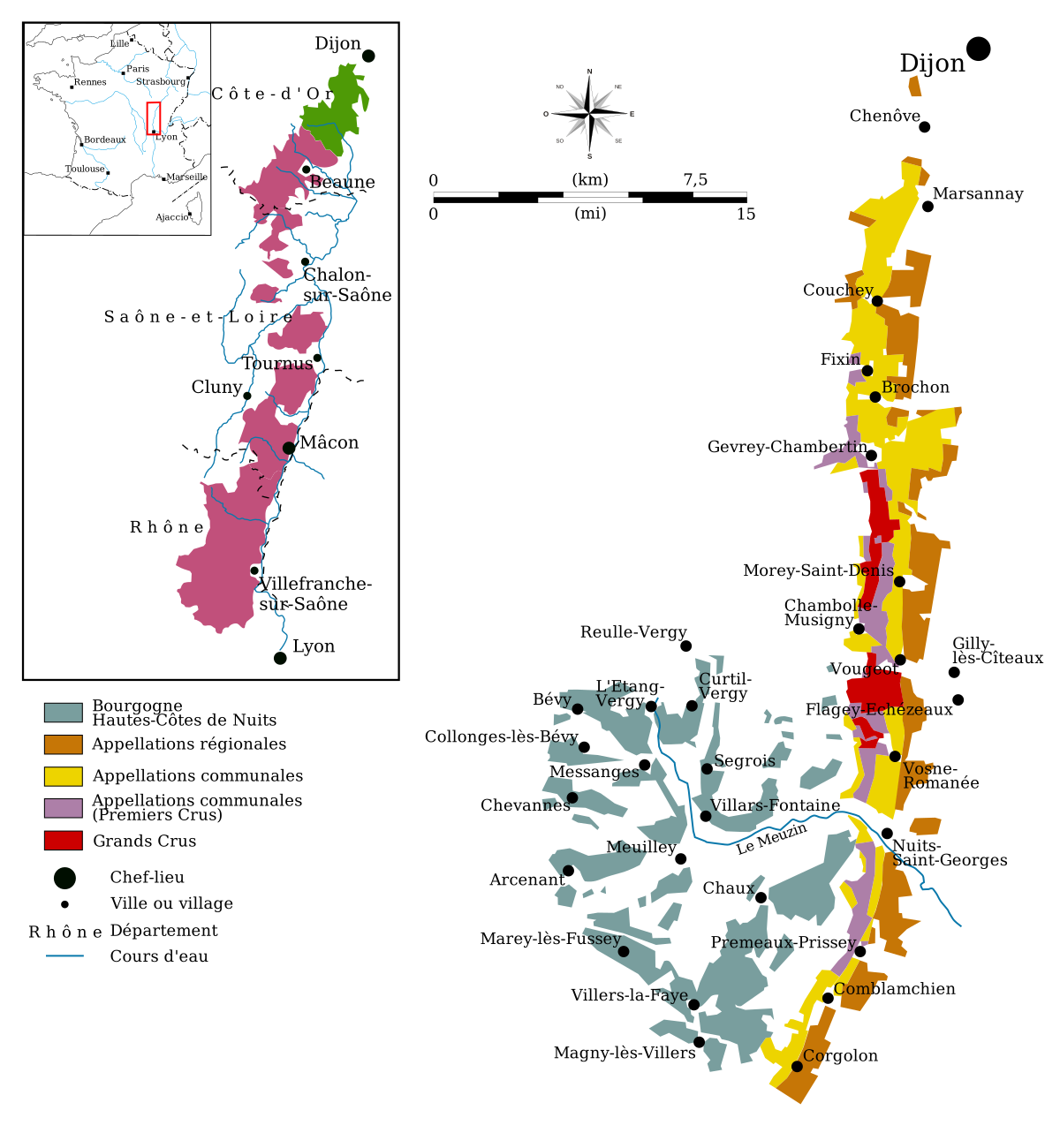
The Cotes de nuits is made up of 14 sub appellations or communities, making it more difficult to understand.  These can be seen on the map to the right above.  Everything between Dijon and Nuits-Saint-Georges is a part of the Cotes de nuits.  You will note that a lot of towns are hyphenated.  This is because the town was unknown, but the grand cru wine produced in that town was well known.  The first word is the name of the town originally, and the second is the name of their most famous grand cru wine.  (Marketing yet again)  6 of the 14 communities have all 24 grand cru locations, so we will focus on those spots for the sake of space and time.  They are the village of Gevrey-Chambertin (Masculine wines) (9 Grand Cru vineyards-Le Chambertin, Chambertin-Clos de Beze, Mazis-Chambertin, Chapelle-Chambertin, Charmes-Chambertin, Mazoyeres-Chambertin, Griotte-Chambertin, Latricieres-Chambertin and Ruchottes-Chambertin).   

Morey-St-Denis  (Masculine wines) (5 Grand Cru Clos de la Roche, Clos St. Denis, Clos des Lambrays, Clos de Tart and Bonnes Mares which it shares with the village of Chambolle-Musigny) 

Chambolle-Musigny  (elegant wines) ( 2 Grand Crus Bonnes Mares and Musigny as well as its several high quality premier crus)
Vougeot (Full bodied) (1 Grand Cru Clos de Vougeot). 
Vosne-Romanee(Round velvety wines) (6 Grand Crus Romanée-Conti, La Tâche, Richebourg, La Romanée, Romanée-St. Vivant and La Grand Rue).  
Flagey-Echezeaux  (2 Grand Crus Grands Echézeaux and Echézeaux). 
Cote d' Beaune  is the southern most regions of the cote d' Or.  As I mentioned above, this region makes both white and red wines. 
The map above includes the Cotes de beaune which is the strip of land between Beaune and the Dheune river in the south.  This strip is just south of the cote de Nuits.  The reason for the white and red is that there is large variability of terroir in the Beaune.  This is the land of famous white burgundy from places like Mersault and Chassagne-Montrachet.  Both the north and southern most regions of the Beaune produce some pinot Noir based reds as well due to changes in Terroir mentioned above.

Again, there are so many AOPs in the region that we will focus on the ones with Grand Crus.  Remember that like other regions, and maybe even more so, you can find fantastic wines outside of the grand crus, but it is too much to cover and my fingers are starting to hurt from typing.

The first stop is Pernand-Vergelesses (1 grand cru shared Corton-Charlemane)  The second is Ladoix-Serrigny (Also contains part of Corton-Charlemane).  
The next is Corton-Aloxe which has the only Grand Cru (Aloxe) red in the Beaune, and I am thankful since I have a 2008 sitting in my basement waiting to be enjoyed currently.  Additionally they have Corton-Charlemane for whites as well).  There are many 1er cru from the area to the north of Cotes d'Beaune, but those are the only grand cru.

The South houses the preferred communities.  I wills start with one near and dear to my heart, because the first white burgundy I have tasted came from this village.  Mersault has no grand cru.  Why talk about it?  It produces some of the best white burgundy in the region according to some.  It has a honeyed flavor with butter and a bit of nuttiness with age.  Debates have raged on whether Les Perrieres should be elevated.  

Puligny-Montrechet (3 grand Crus La Montrachat, Montrachet, and Bienvenues-Bâtard-Montrachet) also contains "scabby hill" one of the most famous vineyards in the world.  I call it out mostly because i like the name (Mont Rachaz).  

Chassagne-Montrechet shares La Montrachat, but also has Bienvenues-Bâtard-Montrachet. These are whites that greatly benefit from aging.  
I count 6 total grand cru in the Cote de Beaune.  
If you are confused, it is likely because I am as well.  This is a bit overwhelming to say the least.  If I messed something up, please let me know because I am going to have to take a test on this at some point, and I need to know if I am wrong. 

The last two regions worth noting in the area are Cote Chalonnaise and Couchois as well as Maconnais.  Cote Chalonnaise has Aligote wines in Bouzeron and Gamay in other areas.  this is a lesser area of Burgundy. 

Maconnais used to be Gamay country, but now is over 80% Chardonnay.Pouilly-Fuisse is located in Maconnais, a wine that you can find at most supermarkets, and became popular in the late 1970s.  

Technically part of Burgundy is Beaujolais.  Beaujolais has 13 appelations.  There are 10 Crus AOP:  St Amour, Chenas, Julienas, Moulin a Vent, Fleurie, Chirouble, Morgon, Regnie, Brouilly, Cotes de Brouilly.  Beaujolais-Village AOP, and Beaujolais AOP are the ways that you will see the wines labled.  Cru is the best.  Villages are next, with Beaujolais AOP being the more rustic version of the wine.  Gamay is the grape of choice in the region.  Once a year you will also see Beaujolais Nouveau, which frankly gives the wine its bad name.  It is bad.  I have had it for several years, and decided that I don't need to drink it anymore.

Beaujolais at its best will taste like a great Pinot Noir.  These wines are built to last 10-15 years and some last up to 20.  They have floral aromas, spice, Morgon makes perhaps the best and most rich Cru Beaujolais with Cote Du Py being the best of what Morgon has to offer.  These are NOT Beaujolais Nouveau, and should be tried.

Next week we will talk bubbles.  Stay tuned.

Saturday, January 31, 2015

Bordeaux

BORDEAUX

In addition to taking this great class on wine, I have bought a book.  If you are interested in anything I rant about here, I highly recommend it.  The book is aptly called the Wine Bible, and it is by Karen MacNeil, who I believe is a master sommelier, and is a fantastically engaging writer.  McNeil's book like the class appropriately starts with France as the center of the wine making world.  Unlike the class, she starts the story off with Bordeaux.  On page 112, McNeil begins to share with her readers the wonder that is Bordeaux, her discussion continues for pages, and pages finally finishing on page 160.  No other wine region anywhere in the world gets as many pages devoted to it as this region.  Why?  Well, it is not uncommon for the finest wines from the finest vintages to sell for prices generally reserved for fine works of art, cars or homes at auction.  Besides the wines, the history of Bordeaux is long and very wine-centric.  Finally, wine laws that set up the concept of AOC/AOP started as a means of establishing a system for informing consumers the quality of the wine from the region by allowing them information about the place (Terroir) that the grapes were grown.

Grapes grown in this place are both red and white.  Reds include Cabernet and Merlot primarily, but also include Cabernet Franc, Malbec, and Petit Verdot.  Whites include sauvignon blanc, and semillon as major contributors, and can also include muscadelle and ugni blanc.

Bordeaux is the most influential wine making region in the world.  The goal of the top growers is to use place, combined with blending of grapes to produce the most complex, and age-worthy wine anywhere in the world.  It is also the largest vineyard space producing fine wines anywhere in the world.  Bordeaux produces over 700 million bottles of wine per year.  Given that the price of many of these wines is so high, France makes a pretty penny or Euro as the case may be, off of this region's bottled bounty.

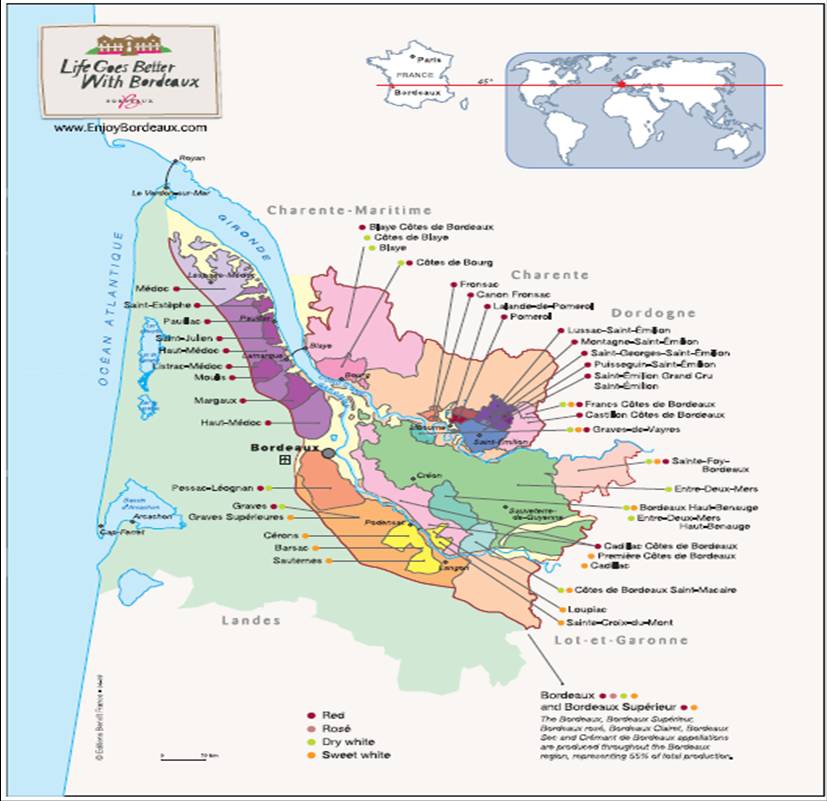
Looking at the map of the region (Right), which if you think about an anatomical model that would be in a doctors office, looks like a woman's nether-regions if she was standing on her head.  The opening of the birth canal is the Atlantic ocean and the birth canal is the Gironde river.  Sorry if you did not want that picture in your head, but I did study reproductive biology in a past life.  Also, I am right...and funny.  More on the funny thing later, this is a very serious region.

Typically people talking about Bordeaux talk about it as being split into two halves.  The most important of these halves is the Left Bank.  I bet you could have guessed that the other is aptly called the Right Bank.  Bordeaux produces whites, reds, rose's, sparkling wines, but nearly 80 percent of the wines that come from the region are red.  The best wines in the region are in the left bank, and all of the first growths reside on that side of the river, however, good wine can be had on both banks.

We will start with the left bank which is represented on the left side of the river if you look at a map.    The most famous part of the region is the Medoc.  As you travel up the river within Medoc, you will find that it is broken into many sub-regions.  Starting at the top with perhaps the most clever named region MEDOC or Bas-Medoc, followed by Haut-Medoc, Saint-Estephe, Pauillac, Saint-Julien, Listrac-Medoc, Moulis, and Margaux.  Also Notable in the left bank is Graves and its sub-region Pessac-Leognan, and finally Cerons, Barsac (Just bought a bottle from there today) and the most famous Sauternes know for their sweet wines made with grapes infected with noble rot.

The right Bank is most well known for Saint-Emilion and for Pomerol, and others I will not spend time on here.

The Left bank is a fantastic place to grow Cabernet Sauvignon due to its soil made of mounds of gravel from the Pyrenees mountains.  The Dutch cultivated this soil back in the day when they were big into the spice trading thing, and left it to the French to prosper from to this day.  This specialized soil acts as a perfect filter and drainage system.  Cabernet Sauvignon loves growing there.  If you travel to the left bank, you will see some smiling Cab vines everywhere you turn.  In addition, the weather is great for the grapes too.  It is a maritime climate with the Atlantic ocean moderating temperature change.  Winters are short and generally frost free.  Summers are warm.  The two issues that can make the happy smiling vines sad are humidity and rain, both of which can cause the grapes to rot.

The Medoc region includes most of the 1st growth (Best vineyards) in the region.  These are growers who were designated as the best in 1855 as making consistently great wines.  They frequently forgo yield, and may cut 35%-50% of the clusters off of the vine to concentrate sugars.  This reduction in yield means that the wines are fantastic due to the maturity and intensity of the grapes.

There are 5 total first growth labels and 4 of them reside in the Medoc region, all of which are in the Haut-Medoc.  Bas-Medoc produces mostly Merlot, but as we travel south to the Haut-Medoc, it quickly becomes Cabernet country for the reasons mentioned above.  Traveling south through the Haut -Medoc, we come to St-Estephe, where the wines tend to be more acidic, and while they are mostly cab based, they grow more Merlot in the area than any other commune in the area.

Next is the finest wine making region perhaps in the entire world.  It is called Pauillac.  Three of the first growths can be found in this AOP including Chateau Lafite Rothschild, Chateau Mouton-Rothcshild, and Chateau Latour.  The wines from this region are intended to be aged for years, frequently needing at least ten years before they have started to harmonize.  These wines also get the largest price tag of any other area in the world.  The biggest price tag can be placed on the three chateau listed above.  The wines from the first growth regions sell for thousands of dollars.  They are frankly out of my price range, so don't ask me what they taste like.  I should have married for money, but instead, I am stuck drinking wines that are FAR less expensive.

St-Jullien has some good wine as well, NO FIRST GROWTH wines, but 80 percent of what they produce are Cru Classe.  They have 5 second growths and two of them are  "Super seconds", meaning they are seconds, but good enough that they stand out of the second growths.  These are Chateau Leoville and Chateau Ducru-Beaucaillou.

Margaux is the largest AOP of the Haut-Medoc.  They have 21 classified growths, more than any other AOP.  There is one first growth creatively called Chateau Margaux.  These wines are often described as having feminine beauty.  They frequently have a floral bouquet with spice, and a lot of finesse.

The next stop is in Graves.  Graves is know for both its red and white wines.  The soil is gravel and thus the name.  The best wines in Graves are made in the Pessac-Leognan commune, home to another first growth wine Haut-Brion.  Additionally, all other cru classe wines that are produced in Graves can be found in Pessac-Leognon.

The final area of note on the left bank is Cerons, Barsac, and Sauternes all of which produce a semillon, sauv Blanc and Muscadelle based botrytis infected sweet wine (Noble Rot)- Which by the way is a good thing.  These are exceedingly expensive, and are only made in years when the fungus cooperates.  These wines produce thick, honey, apricot, and citrus flavors with hints of acacia.  Wines from this region are destined for better things the longer you can keep them.  They get creamy and beautiful with age.  Also note, that unlike many sweet wines, the acid in these allow for a fantastic balance.  Don't fear the sweet wines.  We are not talking blackberry kosher.  These are big wines often served as a counterpoint to rich savory dishes like foie gras (I am not in the mood for the political discussion about the geese).  They taste fantastic, and pair well with the wine.

Let's cross the river shall we.  We are now on the right bank, and I will only touch on two communities over on this side.  The first is St-Emilion and the second is Pomerol.  St-Emilion tries to confuse the world with yet another classification system with their own "Grand Cru AOP"  this is an Appellation, not a commentary on the quality of the wine.  In order to be labled accordingly the wine has to have higher alcohol content.  It is only .5% more though so don't go looking for a party with these wines.

Pomerol is tiny and has sandy gravely clay soils  Merlot is fantastic in these soils.  While Pomerol does not have a cru classe wine, they do have a number of fantastic wines that have achieved cult following.  It is almost like this is where the French go to break the rules.  Chateau Petrus is the most known of these wines.  Also notable are Vieux-Chateau-Certan, Chateau Lafleur, and Chateau Le Pin.  These wines can go for a lot of money despite being cru classe.

There are many other areas of Bordeaux that make a lot of good wines.  White, red, sweet, dry.  They get less acclaim, but many make wines of good value.

Here is the takeaway.  Bordeaux makes good wine.  The best wines come from the following 5 places:

1-2.  Chateau Margaux (Margaux), Chateau Lafite-Rothchild (Paulliac) (Most elegant in the region),
3.  Haut-Brion (Graves) (Most Earthy)
4-5.  Mouton-Rothchild (Paulliac) and Latour (Paulliac) (Generally most powerful)


Friday, January 23, 2015

Loire Valley

Loire

There are many of these fairytale castles littered about in Loire

Ok, Seriously, I have a Masters in Biotechnology, and another in Business Administration, and I have NEVER had so many new words to learn as I do now.  There are a bunch of AOCs (Appellation d'Orgine Controlee- a French Appellation system created in 1935, so you know the place from whence the grapes come) in the Loire Valley, as well as sub appellations whose names I have never heard of.  I drink a decent amount of wine,  and have even planted vines in my front yard (Neighbors love me) and some of the grapes I have never heard of either.  It would honestly be a lot easier if they named these damn things in English since the whole world does speak English these days [See Stupid American].  Who knew I signed up for a foreign language class of sorts.  I hated Spanish in high school, and guess what, I still hate it. (French in this case, not Spanish, but same principle applies).

So the story of the major reds grown in the Loire are quite easy  I will use percentages throughout the rest of this article to share the importance of a grape by percent of production.  The Reds in highest production in the Loire are Cabernet Franc (45%), Love it, know it, makes me happy...and Gamay Noir (16%), heard of it, know of it, certainly couldn't pick it out of any kind of line-up, but I know it is the grape in that crappy Beaujolais stuff.

So the major whites are less easy, and make up the majority of the wine from the region.  Melon de Bourgogne (44%, I think I just hurt my throat, and I am apparently not the only one confused, because they have grown this grape in California previously and mislabeled it Pinot Blanc, which is an entirely different grape altogether...It is an entirely different kind of grape.  Bourgogne is what they call Burgundy in France, and the Melon grape is thought to be from there.  Got to hand it to these grape namers, they are a very creative group of folks.

The other major white varieties are Chenin Blanc (30%) and Sauvignon Blanc (24%) are grown in abundance in the region.  I am a fan of both of those, so I will enjoy.

If you look at some of the other white grapes that are grown in the Loire, they include but are not limited to Arbois, Chardonnay, Chasselas, Folle Blanche Pays Nantais, Groslot Gris, and Muscadet.  On the Red side of the tracks you have some big names such asAbouriou, Cabernet Sauvignon, Cot (Same as Malbec in the rest of the world), Grolleau Loire, Merlot, Val de Loire Chinon, and a few others.  It is beginning to feel like the teacher is making some of these up just to mess with us, but I am going to give him the benefit of the doubt.

Which brings us to our next issue and that is that the grapes that are used in making the wine will be NOWHERE on the label.  Really?  This blind tasting thing is hard enough, but now I don't even know if I am right?  Then, just to make matters harder, the French added two other clasification systems, 1.  Vin Delimite de Qualite Superieure (A second appellation system) introduced in 1949, and 2. the Vin de Pays to identify table wines (1979).  I liken all of this to walking into a library and trying to find your books with the Dewy Decimal system and another system in play. Oh well.
This whole region huddles around the longest river in France aptly named the Loire river (Thank God, one less word for me to learn).  The river is 630 miles long making this region quite large.  It starts in Mont Gerbier de Jonc in Ardeche and runs to the Atlantic Ocean.  The river starts flowing NORTH, yep, I said it flows north, and then turns West for the rest of its winding journey.  You can imagine that the weather and soil compostion varies with the terrain, and the proximity to the ocean, and thus, the grapes grown in the Loire Valley will do the same.  More to come on that in just a minute.

There are five major vineyards of the Loire Valley and this is where the language lesson begins.  The first is the Pays Nantais which is the area closest to the Atlantic ocean, and also the area furthest downstream since the river lets out into the ocean.  The soil here is mostly Schist (Please be careful how you say that around the kids)  In Pays Nantais, the most prevalent grape grown is Melon de Bourgogne.  The wine is known as Muscadet and is known for its acidity and really that is about all.  It is kind of one note with some stone fruit and lemon with dense minerality.  these are wines that are supposed to have lighter, and fresher character, and show best at low alcohol levels generally below 12%.  To insure that you have a best in class Muscadet, you can look for an unofficial designation called Hermine d'Or named after a little white muskrat like animal.  There is a second lesser known wine made in the region from Folle Blanche grapes called Gros Plant, and according to the teacher it is as the name would indicate, GROSS.  He says you should only drink it if you are at a cafe chain smoking cigarettes.  I don't suggest smoking, so I would say, skip it. 

Traveling up the river there are two towns generally considered together both of which are known for their sweet wine made from Chenin Blanc, only here it is called Pineau de la Loire.  These towns are collectively known as Anjou and Saumur.  This is the largest and therefore most diverse region of the Loire.  In this region they also make some reds from Cabernet Franc, as well as a rose made from a grape called Grolleau.  Nearly one third of the plantings are cab franc, and those reds are getting progressively better over time.  Anjou Blanc is made entirely from Chenin Blanc which is well suited to its colder climate.  It is slow to ripen, and maintains its high acidity.  Savennieres AOP  are the best example of these wines and develop honeyed richness with age.  They are perfectly paired with a great lobster bisque.  The second sub region to talk about is Coteaux du Layon AOP.  The Layon river is a tributary of the Loire and in this region they make late-harvest wine beautifully infected with noble rot.  they must have a residual sugar of 34 g/l, and are quite pricey if you can find one.  Within the Coteaux du Layon, is a town called Bonnezeaux AOP and Quarts de Chaume.  They too make late harvest wines.  These wines are exceptional, expensive and sweet with a residual sugar content of 80g/l or higher.  Additionally I mentioned the reds of Anjou which are generally Cabernet Franc based, and they are generally good values.  Anjou villages AOP produce some of the region's finest examples.  You will also find Gamay based reds as well.  These are lighter reds similar in style, and sharing a grape with Beaujolais.

Next on the cruise up the river is the town of Samur.  They make red, dry white and most of the sparkling wines in the region which come in both white and rose varieties.  Regulations may restrict some of this with a push towards more pure Chenin Blanc wines from this AOP in the near future.  The whites are sometimes a blend containing up to 20% Chardonay or Sauvignon blanc.  Reds allow Cabernet (Both Sauvignon and Franc) as well as a grape called Pineau d' Aunis which is similar to Pinot Noir but with more pepper and some raspberries.  No rose's are aloud in Saumur except sparkling.  Another interesting wine due to the soil composition in Saumur (A hardened limestone near champigny (The "Field of Fire")a llow wines made from cab franc that are light and bright and take on the elegant floral expression of cab franc.  These can be labeled Samur-Champigny.

Next on our LONG river tour is a stop in Touraine.  where you can find the Chenonceau castle,   This castle pictured to the right is a great example of some of the fairytale castles in the region.  As you can tell, they built this beautiful castle into the river.  I am thinking that if I can just make about 100 million dollars writing this blog, I will buy it as my summer home.

While we just talked about the reds of Saumur-Champigny, the best reds of the Loire come from Chinon and Bourgueil AOPs.  This is a place where one of my favorite grapes, Cabernet Franc grows better then anywhere else on earth.  It takes on raspberry, and tobacco as well as aromatics and leaves you with beautifully integrated tannins.  Borgueil offers beautiful reds and some rose wines, while Chinon makes a few wines that are white from, you guessed it, Chenin Blanc.

Other notable sub regions in Touraine include Vouvray and Montlouis-sur Loire AOPs.  Vouvray AOP is Touraine's largest of the white wine districts.  These wines are a great value generally.  In fact we had a quite nice one from a California Grocery chain for about 7 dollars in class and all of us agreed it was quite nice.  the beauty of these wines is that they are generally a bit sweet, and balanced with high acidity.  They are a beautiful food wine.  Nontlouis-sur-Loire AOP makes similar wines and in fact until recently, they were not their own AOP.

A vin gris which is almost a copper color, is also sold made in the region.  This wine is like a rose, but generally fruity with a firm structure and a dry and nutty finish.  It is bottled under the name Touraine-Noble Joue and is believed to have been bottled the same way in the 15th century.  Drink early and often as it is not built to age.  The last grape worth doting is Romorantin which is a cousin of Chardonay, and used to be prevalent in the Loire, but now is only made in Cour-Cheverny AOC.

Am I losing you yet?  My fingers hurt from typing.  The nice thing about this next part is whoever is in the Loire decided to use English (My prayers are heard) to describe this next region.  It is called the "Central Region" although if it were in France, it would likely be called something that sounded more like Cen-Tral'.   Sancerre has reds and roses but that is not what gets the highest praise for this AOP.  The raved about wines from this region are whites from Sauv Blanc.  Can I get a collective Ahhhhhhhh?  The Sauv Blanc planted here are among the best in the world (Sorry friends in NZ, while your SBs are fruity and good, the minerals and balance in these is fantastic).  The minerals that they display come from a flinty soil that gets expressed in the wine, think sulfer after a gun fires.  As mentioned before, they also make some Pinot Noir which is lighter in style but can be quite good in warm years.  Also the Pinot Noir is CHEAP and a good value frequently.  Sancerre and Pouilly Fume are almost always Sauvignon Blanc.  My one call out is that there is Pinot Noir bottled under the Sancerre lable so if you want a Sauv Blanc, please make sure the liquid in your bottle is white!!!  Pouilly Fume will always be white, and always be Sauv Blanc.  There are other AOPs in the central Vineyards, but they are smaller and more difficult to find stateside.  they all make Sauv blanc and or pinots along with vin gris in some.  Orleans-cleryAOP has Cab Franc based reds.

The final stop on our river tour is Auvergne.  This region is small so hopefully it wont take to long.  Gamay is the famous grape here and again they make wines similar to Beaujolais.  We will start in Chateaumeillant.  It is a tiny AOC and produces reds from Pinot Noir and Gamay and a vin gris.  Saint-Pourcain is know for aromatic wites made from Chardonay, Sauv Blanc and Tressallier, which can produce high alcohol wines that have a lot of bitter notes.  Cote Roannaise produces a wine similar to Beaujolais, but likely better due to the more boutique wine making styles.  Cotes d' Auvergn which is  a region that makes Chardonay and gamay and Pinot Noir based reds.  And finally Cotes du Forez which makes Gamay into both a red and a rose wine.

If you are not overwhelmed like I am, that is likely good.  Think of Loire as a BIG vineyard that produces good wines of varied types in a storybook setting.  The sweet wines were produced because back in the day, when people were not able to access sugar, they made sweet wines to give them a little sugary treat after a meal.  Those were generally exported to the rest of the world and taxed by the Dutch who controlled the access to the Atlantic.  oddly they are still produced like that today so that the man can tax you and me for the same treats.  The less sweet wines were consumed locally and in Paris.  Today they tax us for those too.  You can see that the locals could likely afford it, after all, there were castles EVERYWHERE.  Next week, join me for a short trip to Bordeaux.  I am sure it will be all the more confusing, but the wines are worth understanding.


Monday, January 19, 2015

Alsace

WEEK 1.   ALSACE

I am in a profession (Marketing/Sales) in which I spend a lot of time with other people, important people, who make big and important decisions that drive not only my company's business, but I also meet with people who hold high positions at my customer's companies as well.  We talk about tough topics, sometimes we don't agree on matters worth millions of dollars to our bottom lines, and I seldom if ever get nervous.

I also speak in front of a room frequently.  They say that most adults would rather die then speak in public.  I don't get that, I am not that guy.  In fact, I don't really know what it means to be nervous.  I don't feel those feelings often.  Some of you may be thinking, weird... I know right.  I am not sure why it is, but it is.  I have been that way since I was a kid.  I played a lot of sports, and frequently thought about being the guy with the ball at the end of the game with a chance to win it all.  (Maybe I would have even done better then the Packers last night against the Seahawks; had to, I am a Bears fan).

Why all of this strange background to start an article about Alsace you might ask.  Fair question I suppose, It comes down to this, I was starting school for the first time in 9 years, and I was legitimately nervous.  It took me a couple of days leading up to the first class to realize just what this strange feeling that I had was.  Indigestion?  Excitement?  Just Gas?  No, it was definitely nerves.  But why?  What I realized is that I had been drinking wine, and a lot of what I thought was good wine for years, thinking that I really liked it, but was I right?  Am I a fool?  Did I really know the difference between a Cabernet, and a Merlot.  I cook too, is my palate really as good as I think it is?  WHAT IF I CAN'T DO THIS?  

Geesh, This nerves thing is exhausting.  I don't know how nervous people do it.  (Might I suggest more wine).

So I drive to class at a campus I have never been to, approximately 30 minutes from my house.  For those of you familiar with Chicago traffic, I would say it was fairly good that day, and yet...30 minutes it was, adding minutes to my Thursday for the foreseeable future.  When I finally arrive, I come to find out that Harper Collage has A LOT of different buildings spread across many miles.  Who knew?  So it was a bit like that dream in which you are going to class and you can't find your room, only it was the first day and not the night of your final exam.

I finally found the room W213, and I walked in...Perfect, first one there, except for the teacher who was sitting in the room with 6 places set at a table.  Each place had 4 wine glasses a plate with a butter knife, a glass for water, and a spit cup (Classy I know, but an essential wine tasting tool since I had to drive home).  There were two pitchers of ice water in the center of the table, and a screen pulled down with a slide that welcomed us to class.  

My teacher introduced himself in a thick french accent (Appropriate) and I did the same.  (Without the accent of course)

Teacher's first question:  "Are you in the industry?"  

ME:  Trick question?  "The Industry" as though there is only one?  Nope.  I am not in the industry, I am in healthcare.  I like food and wine, and am doing this to gain better knowledge of a subject near and dear to me. 

Teacher:  Oh...

SILENCE

Am I in the right place?  Should I be here?  This was made worse by the fact that at this point another student walks into the room his name was Carlos, and he has been in the industry for a long time working at some of the top restaurants in Chicago and Las Vegas.  Oh, and the guy has an exceptional knowledge of food and wine, and many years of tasting experience as a server.  GULP, What have I done to myself.  A few more trickle into the room, but none of them have experience in "THE INDUSTRY."  They do however have 1 semester under their belts.  Grrrrr.  I am the NOOB.  

So the class begins and we start learning about Alsace.  It is a French town that borders Germany, however the Germans have had this plot of land many times as well.  The Romans made wine here too, although all of the grapes have been ripped out and re planted post 1945. It was the last AOC to be recognized, and it was not officially an AOC thing (different then a G thing) until the late 60s.

The region is broken into two parts, the Haut-Rhin, and Bas -Rhin, with most of the best wines coming from the Haut-Rhin.  Over two thirds of the region's Grand Cru (Grand Cru wines are vineyards recognized for their continued excellence over the years and command a price accordingly)  wines are located in this sub-region.

This is a RARE wine making region that is known for WHITE WINE (Make snobby white wine comment here, like I DON"T LIKE WHITES).  These are not boring white wines.  They are bold, aggressive whites that are built to age.  A Riesling from Alsace can age for decades, and pick up a depth of flavor and a deepening of texture as they do.  What I learned is that, probably because the Germans make their Riesling sweet, Riesling from Alsace tends to be dry to off dry.  (No sugar is left when the yeast is done fermenting the grapes)  This means that you are left with a higher alcohol level, and decent acid making these wines great for pairing with most foods.  Likely not the dessert wine that many think of.  Other important grapes, also called noble grapes, from the region include Pinot Gris, Muscat, and Gewurztraminer (Extra points for spelling correctly..I failed).  The region butts up to the Vosges mountain range making it very dry, and in fact one of the driest regions in all of France.  The vines are planted on the East side of the mountain, while the rains usually hit the west side.  It is also cold in the winters, but due to the location of most of the vineyards, grapes get sufficient sunlight to ripen fully.

Pinot Gris called such because gris means grey in French, has pinkish skins leaving the wine with a bit of color.  It is frequently smokey and spicy with good acidity.  Even if you don't like Pinot Gris (Pinot Grigio) from other parts of the world, these are greatly complex wines and worth another look. 

Gwerztraminer tends to share tropical fruit (Mango, Lychee, and the like) and some say spices, although my teacher was strongly opposed to the spices idea).  It is a wine that shares its nose easily (Smelly) and the ones from Alsace tend to be dry or off dry.  

Finally Muscat is another aromatic grape and it shows floral and grapy notes.  Imagine that, a grape wine that FINALLY smells like grapes.  Go figure.  

Two other things to know about the wines of Alsace, most of them are single variety.  They put a lot of effort into making the wines taste like they should, and to taste Terroir is to ensure that the wines are single variety wines.  There are a few exceptions.  Sparkling are made from a field blend, and Edelzwicker (Noble Blends) are usually mediocre blends from the region, along with Gentil which is also a blend, but they must have 50% or better of the 4 noble grapes.

Finally in years in which late harvest is possible, there are two wines that are usually VERY expensive that can be made.  The first is called Vendages Tardives (VT), and the other even more rare, and thus more expensive is called Selections de Grains Nobles. (SGN)  Both despite being late harvest are usually dry to off dry.   

The soil is like a patchwork quilt, so soil is less important then the grapes and the spot on the mountain in order to achieve great enough sunlight.  

These wines were all new to me, so when we did the blind tasting, I was a bit overwhelmed.  A good aged Riesling smells a bit of motor oil.. yep, and that is a good thing... Huh.  Not sure what to make of that.  It is similar to people telling you that some Sauvignon Blanc smells of cat piss, or barnyard followed by as it should.  I am not sure anything you eat should, but whatever floats your boat.

We tasted a BAD and I mean bad Riesling and Pinot Gris to kick things off, and it was a good illustration that even the French can admit that they make some bad wine, because the teacher said it was like dog food.  We enjoyed that.  Next we tasted the Gwurztraminer and a grand cru Riesling, and quickly I understood what great food wine they can make in Alsace.  I will be trying many more.  I even came home and drank the only dry Riesling that I had in the house.  It was an Australian Riesling made in the Alsace style from the Pewsey Valley.  (YEP!)  Did not get it, say it out loud.  (Got it now?)  Seriously?  do I have to spell it out for you?  I may be a bit sick in the head.

So in conclusion, for homework, I think I need to DRINK MORE WINE!  Woo hoo.  If I knew back then what I know now, I would have majored in this earlier.  Wine drinking for homework doesn't suck.  I am excited to continue exploring.  I am a NOVICE in this area of the world and have a lot more to learn, so I look forward to doing so.  Fortunately the only way to do so is to drink, or as we say in the "INDUSTRY", taste more wine.  I intend to.