Friday, March 20, 2015

Central Italy/Toscana


Central Italy/Tuscany

Perhaps one of the most fantastic vacations I have had the pleasure of going on in my lifetime was a trip to Florence, and a stay in Radda in Chianti.  We stayed in an old manner house in a medieval town.  The town was nestled into the hills, and the words, "Go straight" to a driver had no real meaning.  Way up in the mountains, overlooking the valley below.  The sun casting shadows from the few clouds that floated bye.  Tuscany is beauty.  It is the birthplace of the art world as we know it today, it is home to some of the most beautiful and simple food that the world has to offer, and it is the home to some of the best olive oil and vinegar (Aged Balsamic).  It is also the home to Chianti Classico.  To understand Italy, and it's people, one must simply sit in a wine bar, or a enoteca (wine cafe) with a glass of Chianti, some bread, and a plate of food (Whatever they suggest that day).  Food is Italy, and food is never served without wine.  A meal without wine in Italy is called breakfast, and I really do mean that.

Radda in Chianti
On day 3 of our trip, after buying some expensive bottles of wine, a very nice server walked over to our table, and said, "you know, you don't have to do that."  Do what? said we.  She said, "Buy expensive wines in Italy."  Why?  The local "house wines" were fantastic, and at 12 Euros a bottle, much less expensive than the stuff we were ordering.  It is what the locals drink, and it was great.  They were proud to display it, and proud to serve it, and we were all too happy to drink it.

So, lets talk about the wines of Tuscany shall we?  One cannot discuss Tuscany without Sangiovese, a grape that is so elegant, and yet so misunderstood.  Why?  Because it used to be served in America as Chianti,  in a bottle called a Fiasco.  These are the bell bottom bottles with wicker baskets on them.  The wine in Fiascos is NEVER good, and thus, that was the thought of Chianti in the United States.  Too bad really, because Chianti is great, and Sangiovese is the grape that makes it so. 

There are 11 DOCGs in Tuscany including Chianti Classico.  The other red DOCG that gets a lot of street cred in the world market is Brunello di Montalcino DOCG (Thought to be among the best wines in the world), Carmignano, Chianti (Note that all Chiantis are not Chianti Classico), Elba Aleatico Passito, Montecucco Sangiovese, Morellino di Scansano, Rosso della Val di Cornia, Suvereto, Vernaccia di San Gimigano, and Vino Nobile di Montepulciano ( A beautifully rustic red).

Brunello di Montalcino wines are made from 100% of a clone of Sangiovese called Brunello, and must be grown in the Montalcino region.  Brunello must be aged a minimum of 2 years in wood, plus another 4 months in the bottle.  They may not be sold until 5 years after the harvest on January 1.  Thus, the 2010s are just hitting the market now in 2015.  Brunello Riserva must spend a minimum of 2 years in wood plus 6 months in a bottle, and cannot be sold until 6 years following the harvest.  So the 2010s will come out next year in 2016.  Additionally, due to the long cellar times, producers of Brunello may also produce a little brother wine called Rosso di Montalcino which is less tannic and often more approachable young.  Therfore, Rosso only needs to be in the cellar for 1 year prior to release, and only 6 months needs to be in oak.  These wines are lighter and fresher and 1/3 to 1/2 the price of a Brunello.  There is good wines to be had in the Rosso category as well.

Carmignano is another Sangiovese based red that must contain at least 50% Sangiovese but also has french varieties like Cabernet Sauv and Cab Franc (Up to 20%), and a host of other grapes like Toscano, Malvasia (White) Canaiolo Bianco (White) up to 10 percent.

Chianti Classico and it's big brother Riserva are grown between Florence and Siena.  Chianti Classico used to be limited the amount of Sangiovese that they included in the blend to 80%, however, that requirement has since been lifted, and many wines are made with 100% Sangiovese.Traditional blends included white grapes like Trebbiano and Malvasia Bianco, but they are no longer alloud since 2006.  Chianti Classico must have 12% ABV, and be aged 1 year, Riserva must have 12.5% alcohol and be aged 24 months and 3 months in the bottle, and Gran Seiezione wines must be produced from estate fruit, contan 13% ABV, and aged a minimum of 3 years.

Chianti DOCG must have 70 percent or greater Sangiovese.  They are alloud up to 10 percent white grapes and no more than 15% Cabernet Sauv or Franc.  The Chianti Senesi must be greater than 75% Sangiovese, can no longer have white grapes after 2015 (Up to 10 percent until then) and no more than 10% of the cab cousins Franc and Sauv.   Depending on the region there are different ABV requirements ranging from 11.5% up to 12.5%.  All must be aged for at least a year with the Reserva being held back for at least 2 years.

DID YOU KNOW:  In days of old, Tuscany invented a technique called Governo in which they dried some grapes and held them back from the initial fermentation.  If the yeast got stuck, they would add these high sugar raisins to the must, and it would help kick-start fermentation again.  Temperature controlled tanks did away with the need for this technique, however, some winemakers still use the technique by choice, especially with grapes like Verdiccio which can be bitter.  Governo helps to counteract the natural bitterness of the grape.

Back to the program.Elba Aleatico Passito is made in Livorno.  This is made from 100% Aleatico after air drying causing a very high sugar content (30%).  The ABV must be over 19%.

Montecucco Sangiovese also makes wine with Sangiovese and must be greater than 90%.  These wines have a minimum abv of 13% with the Riserva being a min of 13.5.  They must be aged a minimum of 1 year in barrels and 4 months in a bottle, with the Riserva being aged for 24 months in oak and 6 months in a bottle.

Morellino di Scancano is produced with Cabernet... Kidding... SANGIOVESE at 85% or greater.  These wines have a min alcohol of 12.5% and the riserva at 13% Abv.  They must be aged for 1 year and the Riserva for 2.

Val di Cornia Rosso is another Sangiovese blend, but this one only requires 40%.  Minimum Abv is 12.5, and 13% for the Riserva.  It must be aged for one year, with Riserva aged for 18 months in oak and 6 months in the bottle.

Suvereto is actually made from Cabernet Sauvignon and or Merlot plus a max of 15% other red grapes.

Vernaccia di San Gimigano is a funny wine in Tuscany for two reasons.  First, it is a WHITE wine.  Second, it is a white wine grown in the most macho of places.  The town is built of Medieval skyscrapers to scare away its enemies.  This is the town that produces white wine... Irony.  Vernaccia is the grape but they do allow up to 15% other white grapes.  It must be 11.5% alcohol or 12.5% for the riserva.  This wine is aged a minimum of 11 months including at least 3 in the bottle,

Vino Nobile di Montepulciano is another Sangiovese based grape but locally it is known by the name Prugnolo Gentile.  It must contain a min of 70% Sangiovese, but can include other Tuscan grapes.  It must be aged 24 months in wood, or 18 months in wood with 6 in an alternative container, or 12 months in wood with 6 months in a bottle and the rest in an alternative container.  Riserva must be aged a min of 3 years including 6 months in the bottle.

Two other notable wines from Tuscany include Vin Santo and Super Tuscans (Which have absolutely nothing in common but that they are left to discuss)  Vin Santo, or wine of the saints, is made from partly dried grapes and aged in small wooden barrels.  It is made mainly of Malvasia and Trebbiano though some can be made from Sangiovese as well.  It is a beautiful age friendly wine often served at the end of a meal.  The flavors of almond, and orange, honey, and a bit of oxidation are always present.  It is the perfect way to finish a meal.  Frequently, the Italians have Vin Santo with Biscoti and they dunk the cookie into their wine.  It is a marriage made in Italian Heaven.

The last wine I will discuss in Tuscany is the Super Tuscan (So named by Americans)...  Tuscana wines emerged out of Italy as a revolt of sorts.  I know, wine and war should not go together, but sadly it does.  In 1970 a group lead by Sassicaia decided that they were not going to follow Italy's wine laws, which should land you in wine jail (I don't know what that is, but it sounds like a place I would enjoy).  The punishment was that these wines had to be called "Table Wines" and did not get their own DOCG.  Death to wine?  NO!!  Instead, it pushed boundaries, and produced better Italian wines garnering a price premium.  Later followed Tignanello with a blend of Sangiovese and Cabernet Sauvignon.  Today, Super Tuscans can be a blend of Cab, Merlot, Pinot Nero, and even Syrah.

Marches also sits in "Central Italy" (Pronounced Mar-Kay).  Marches has 5 DOCGs and produces 2 main grape types.  Verdicchio (White) and Rosso Piceno which is Marches for Sangiovese.  Lets start with whites.

Castelli di Jesi Verdicchio Riserva must contain 85% Verdicchio and achieve 12.5% abv.   It must be aged 18 months including 6 months in the bottle.

Conero is a red from Montepulciano but may contain up to 15% Sangiovese with a minimum abv of 12.5%  These wines are aged for a minimum of 2 years.

Offida makes both a red and white wine.  The white is made from Pecorino (or Passerina) while the  red made from Montepulciano.  The whites must have 12 percent alcohol if made with Pecorino or 11.5% abv if made with Passerina, while the reds have a min of 13 percent.  Red wines must be aged for 24 months including 12 months in wood and 3 in the bottle.

Verdicchio di Matelica Riserva is a bitter wine made from 85% Verdicchio.  It must have 12.5% abv and be aged 18 months.

Vernaccia di Serrapetrona is made from Vernaccia Nera and is a sparkling red (Rosso Spumante) and can either be dry or sweet.   It must have a minimum of 85% vernaccia Nera and 40% of the grapes must be dried.  It may not be released until June 30th the year after harvest.  It can be made both in the traditional method (Seldom, or the Charmat method.

Lacrima di Morro d' Alba is a red wine not unlike Pinot noir in its nose.  It is very aromatic and smells of Roses, boysenberry jam.  It has nice acid and  soft tannins.

This is a country full of great wines.  Try them.


Friday, March 13, 2015

Northern Italy

NORTHERN ITALY

Weird right?  In France we went region by region, and the France we know is hardly a modern concept.  French people are likely to tell you they are from France.  They will not tell you they are from Burgundy. 

Italy is different.  The concept of a united Italy is a VERY modern concept.  Italy was a collection of smaller nation states until 1861.  Yet, we talk about Italy and their wine making collectively.  Why?  Well, that is because it is not France.  Just like we will likely talk about the USA and their wine making as a collective.  More to come on that when I am in a class on NEW WORLD WINES.  That will not be until next semester.

Now back to Northern Italy.  When I talk about Northern Italy, we are talking about the area surrounding Piemont.  This includes Liguria (Cinque  Terra), the Acosta Valley, Lombardy, Trentino-South Tyrol, Friuli-Venezia Giulia, Veneto, and Emilia-Romagna.  Note that I will make an arbitrary cutoff and say that Tuscany is part of central Italy.  Why?  Because my teacher said so.  Note the word arbitrary.  

Today's class had two remarkable discoveries.  First, I STILL LOVE Nebbiolo.  It is yummy.  Second and perhaps more remarkable, there is a wine region in Italy called Soave.  If you do not know it, you should.  Mostly because it will save you a lot of money.  It is a rare bargain in the wine business of an age-worthy WHITE wine with great almond, vanilla, peach and wood.  Similar in a lot of ways to Burgundy but at a fraction of the price.  I will say more later.

First Piedmont.  Most of the wines produced here are either DOC or DOCG.  Remember, it is only special if not everyone has the designation.  Piedmont is home to Nebbiolo.  It flourishes here.  With two wines, not just one.  The first is Barolo.  A manly, wine with lots of tannins.  It is grown in a rocky soil.  The Italians will tell you that grapes grown in hard soil produce manly wines, while grapes grown in soft soil produce softer wines.  Barbaresco, also made from Nebbiolo is grown in sandy soft soils.  In a lot of ways Barbaresco is Barolo's softer sister.  She is approachable, drinkable today, and is really fun to be around.  On the other hand, Barolo is the gruff older brother.  He can be harsh when he is young.  But with a bit of age, he is mellow and also a lot of fun to be with.  Barolo must be aged 3 years, and Barbaresco only 2.

Be careful if you buy a Barolo.  THIS IS IMPORTANT because there are two types of Barolo wines.  The ones made in a modern style, and those made more traditionally.  Why did i say IMPORTANT.  Lets say you want to drink your wine today, and you are making some great steaks for your friends who are coming to dinner.  You buy a traditional Barolo at the store, and you take it home.  SURPRISE.  That wine will not be drinkable, much less be good for at least 10 years.  A big Tannin BOMB.  Teeth shrinking in their sockets, not enjoyable tannin bomb.  If it was 10 years old, you might be able to drink it, but it will not be for another 10 years that it will be FANTASTIC.

Now, lets say that you bought the same vintage from a modern producer.  He/She has realized that a profit is important, and that people don't have the space or the desire to cellar wines for eons.  Therefore, the modernist has figured out that spending less time on the skins and aging in smaller barrels leads to more approachable wines that are drinkable and enjoyable sooner.  Ahhh, this is what you were after.   Regardless, Barolo is considered to be one of Italy's most cellar worthy, best wines.  The wines that are modern in style and therefore approachable earlier on include:

Ceretto, Paolo Cordero di Montezemolo, Elio Altare, and Renato Ratti

In more recent years the line between the two has blurred with both sides taking the best from what the other has to offer.


Barolo is produced predominantly in 5 areas.  The further south, the softer the soil, and the softer the wine.  They are as follows:
  • Barolo (Softer wines)-Tortonian Soil
  • Castiglione Falletto
  • La Morra  (Softer wines)- Tortonian soil
  • Monforte d'Alba
  • Serralunga d'Alba 
Some of the best wines from Barolo include Canubi, Brunate, and Samassa, in La Morra Brunate, Cerequio, Le Rocche.  Serralunga d'alba has producers Lazzarito and cerretta, Castiglione Falletto has Rocche, Monprivato, Villero and Bricco Fiasco, and finally Monforte d' Alba has Bussia, Ginestra, and Santo Stefano.

Barbaresco is broken into 3 communes, Barbaresco which has top Crus Asili, Roncagliette, Martinenga, and Rabaja.  Neive which has Serraboella, Gallina, and Basarin, and finally Treiso producing crus in Pajore, and Bricco di Treiso.

Other wines that are produced in Piedmont include Dolcetto (Little sweet one) which is usually dry despite the name, and Barbara (3rd most commonly planted grape in Italy) perhaps the most under-rated approachable wine of the bunch.  The beautiful soft tannins and acid make Barbara a perfect pairing with most meals.  You can also find Asti Spumante here, but why would you want to?  Cortese,  a white grape can be found in a white wine called Gavi, and another white grape called Arneis. There has also been a push since the 1980s to grow more experimental varieties here as well.  They are vast and not traditional Italian grapes like Syrah, Cab and many others.

Roero DOCG produces reds also from Nebbiolo, but is most known for a floral white from the Arneis grape Gattinara and Ghemme also produce wines from Nebbiolo but they blend Vespolina and Bonarda to get a wine called Spana.  It is lighter and more acid focused then its Nebbiolo cousins.Lessona and Sizzano also produce Nebbiolo based red blends.Barbera d' Asti and Barbera del Monferrato produce Barberra in the Monferrato hills east of the Barolo country.  Barbara d'asti is released after just 4 months of aging, however, Monferato must spend 14 months aging with six months being spent in wood prior to release.

Dolcetto is produced in 3 DOCGs including Dogliani, Dolcetto di Ovada and Dolcetto di diano d' Alba.  All Dolcetto must be aged for a minimum of one year.  In Ovada, the wines must be highr in alcohol to qualify for DOCG, but the others benefit from the status just by being.

Gavi is also a DOCG.  Made from the Cortese grape it is usually still but can be found in slightly fizzy forms as well.

Others include a sweet wine called Brachetto d'Acqui, Asti (From Moscato), Alta Langa (Champagne like from Pinot Noir and Chardonay), Brachetto d'Acqui (Sparkling red), Freisa (Red similar to Nebbiolo), A favorite of mine Grignolino (light red with great acid and pepper), and Moscato d' asti (Lightly sparkling).  As you can tell, Italians will make wine out of just about anything.  Sparkling, still, sweet, dry, red white, and rose.  In Italy, wine is life, and life is wine... or at least it is food, which needs the wine to go down.

North of Peidmont is the Valle d' Aosta DOC.  This is a region that sits furthest North in Italy.  It has few people, it makes less wine than any other region in the country, and it has a continental climate with cold winters and hot summers.  Top wines produced are Blanc de Morgex.  These are cool grapes because they are still on un-grafted rootstock and have never been impacted by phylloxera probably due to the elevation and seclusion they enjoy.  Enfer d' Arvier made from petit rouge grapes with others blended in.  It is a medium body wine with racy red fruits.  Similar to a Beaujolais with an Italian ZIP.

Lombardy is next.  Most known for their sparkling wines, Lombardy is also the state that contains Milan.  Fashion conscious, wealthy business people have quite a thirst for their wines, but ironically, the wine making regions are far from the city capital.  Lombardy has 5 DOCGs including Franciacorta, Oltrepo Pavese metodo Classico, Valtellina Superiore, Sforzato di Vatellina, and Moscato di Scanzo.  There are also 4 DOCs.  More on that later.

Franciacorta makes sparkling wine by the traditional method.  These wines are Champagne like and produced using Chardonay, Pinot Nero, and Pinot Bianco.  The aging on these sparklers is amazing.  NV wines must be aged for 18 months, while vintage must get 67 months of aging with 5 years spent on their lees.  Pink versions must be aged a minimum of 37 months.

Oltrepo Pavese Metodo Classico produces classic Champagne style wine from Pinot Nero (70% min), and if they have at least 85% Pinot Nero, they can be labeled Pinot Nero (Same as Pinot Noir).  NV must spend 15 months on the lees, while vintage must spend 2 years.

Valtellina is the most important of Lombardy's red wine making zones.  Again, the star is Nebbiolo, but unlike it's neighbor in Piedmont, these wines are lighter in style.  In the region, Nebbiolo is known as Chiavennasca. Valtellina Superiore is a higher version of the Valtellina and must be aged for a minimum of 2 years with 1 year in cask, and 3 years if a Riserva wine.  Finally Valtellina Sforzato is produced from dry grapes like Amarone.

Other wines from the Lombardy region include Botticino (Red blend), Barbera, Bonarda Piemontese, Butafuoco, Cortese, Trebbiano, Trebbiano di Soave, Lambrusco (Sparkling red),

Liguria is the state that holds the idyllic vacations spot know as the Cinque Terre.  Beautiful cliffs overlook the ocean.  Here the vineyards are planted on extremely steep slopes and have beautiful views of the ocean.  All grapes must be picked by hand.  The grapes benefit from sea spray.  These wines are good, but they are expensive.  Mataossu is similar to Vermentino.  It has racy snappy acid with a layer of peach/orange Popsicle.  It pairs perfectly with lighter fish so frequently enjoyed in the region.  Rossese di Dolceacqua is a pale cherry color with a pink rim.  Floral accents with wood get a berry fruit and a vegital finish.  Minerals and acid make this a great wine to drink with food.Vermention is a white wine with great acid and freshness.  These wines are very aromatic.

Emilia Romagna is the home to lots of famous Italian things including Ferrari, Lamborghini, Parmigiano Reggiano, Prosciutto di Parma, and Moderna Balsamic vinegar.Unfortunately, their wines are far less interesting.  Such a let down after that set up...No?

Lambrusco is the most interesting wine produced in that it is a red sparkler that pairs well with the dried meats of the area.  Lambrusco rose is a newer take on this wine and is gaining popularity.  Albana di Romagna, a white that comes in all levels of sweetness from dry to sweet.

North is a dual town that really is two towns in every way.  Trention-Alto Adige/Sudtirol.  In this community there are 7 DOCs including Caldaro, Casteller, Teroldego Rotaliano, Trentino, Trendo, Valdadige, and Alto Adige.  The town of Trentino is found to the south of its sister.  Trentino is mostly Italian speaking, while its sister town Alto Adige speaks German.  Wines produced here can be from a number of grapes including Chardonay, Pinot Grigio, Pinot Bianco, Muller-Thurgau, and Sauv Blanc in the whites, and Gewurztraminer (Which may be from here originally).  The town is well known for its white wines, however reds are produced here as well.

Schiava is the predominant red grape.  This grape may be combined with Lambrusco, Merlot, and others to provide blends.  Lagrein is another red that is denser and spicier then Schiava.  Teroldego is also a red grown in the region.Often described as a cross between a Beaujolais cru and a Chianti.

Vento is next on the list.  It is at the base of Italy's Butt (Boot reference).  Veneto houses it's capital city of Venice.  It rpoduces more wine than any other region of Italy.  this is LARGELY a low quality, High YEILD area.the most important wine from the region is Amarone della Valpolicella.  Made from raisins, this wine grabs great complexity and high alcohol content.  the wine is made from Corvina blended with Rondinella.  Other grapes may be used as well.  Appassimento is a higher order of Amarone in which it ages for an additional 2 years prior to release.  It may also get the label of Riserva if it sits and ages for 4 years.

Made from the same grapes is Valpolicella Classico.  this has had a long history of being Meh wine.  Yep technical term in the wine industry.  Valpolicella comes in Classico and Ripasso, a technique in which they take the Amarone skins and soak them in the Valpolicella to get greater depth, and Appassimento.

Bardolino lies between Valpolicella and the shores of Lake Garda.  Corvina and Rondinella grapes dominate and they are slightly lighter then Valpolicella.  Rose exists as well as Bardolino Chiaretto.

Perhaps the BIGGEST SURPRISE (PAY ATTENTION cause it will bring cheap pleasure).  Soave is the principal and most important wine in the Veneto.  These wines are primarily made from the Garganega grape.  (FUN TO SAY)  Soave may also use Trebbiano di Soave and Chardonay as well.  The expanse of the DOC has been ridiculed in the area, but the DOCGs (Recioto di Soave, and Soave Superiore make some great wines.  Soave Superiore is aged for at least one year and may be called Reserva with two years of aging.  We had one in class that tasted similar to a white Burgundy with great complexity, and it elevated and changed over the evening in the glass.  Note some of the extensions of the DOC have marred the reputation of the wine for good reason, but the wines in this region that are good, are GREAT.  A recommendation includes VIGNETO DU LOT SOAVE CLASSICO.  it retails for 20 dollars and has a flavor and complexity far beyond that price.  Gambellara and Breganze Torcolato make similar wines to Soave.

Prosecco is made in the region in all sweetness levels and can be a very refreshing wine.  Look for ones that are dry or off dry.  There are two DOCGs   Conegliano Valdobbiadene, and the more obscure Asolo Prosecco.

In closing, Italy is a charming, beautiful place, with beautiful food, beautiful people, and a beautiful culture.  Wine is an accent to be paired with the food.  One thing I have noticed over the years, is Italian wine is tough to sip.  Without food, the wines of Italy are like pasta without sauce.  Eat well and drink well.


Monday, March 9, 2015

Languedoc-Roussillon

Languedoc-Roussillon

Ever hear of it?  Many people in the US have not, which is weird, seeing as though this is the region of France that supplies the largest vineyard surface space in all of France.  It is also the largest grower of vines in the world.  The region is so big, that it contributes nearly 30 percent of the total production of FRANCE. BUT... Historically, the region has not had the best reputation.  Much of France's cheap quaffing wines come from this region.  It is also the reason for the diminishing prices of European wine due to over production. Thus, many have called it the "Wine Lake".

While there is still plenty of bad wine coming from the Languedoc, there are also some incredible innovators coming from the region as well.  Due to more lax wine making laws, producers in the region take the best from French wine tradition, and apply new world wine making techniques to them.  Because of this, most wine from the region are sold under the Vin de Pays d'Oc AOC.

We will start with geography.  Languedoc touches Provence, and in a lot of ways offers the same things that Provence has to offer.  White sand beaches, beautiful ocean, but without the pissy attitude to tourists.  Roussillon is more secluded.  Due to the fact that it is a border town with Spain, many drive through here on their way to Spain.  Additionally, you will see a lot of Spanish influence in the region.

The region basically grows a bit of everything in the grape kingdom.  Two that you might not find in most places include Carignan (Mazuelo, Bovale, Grande, Carinena, Carignane are other names it goes by) Llandoner Pelut  (a "Hairy" mutation of black Grenache.  More to come on grapes as we delve deeper.

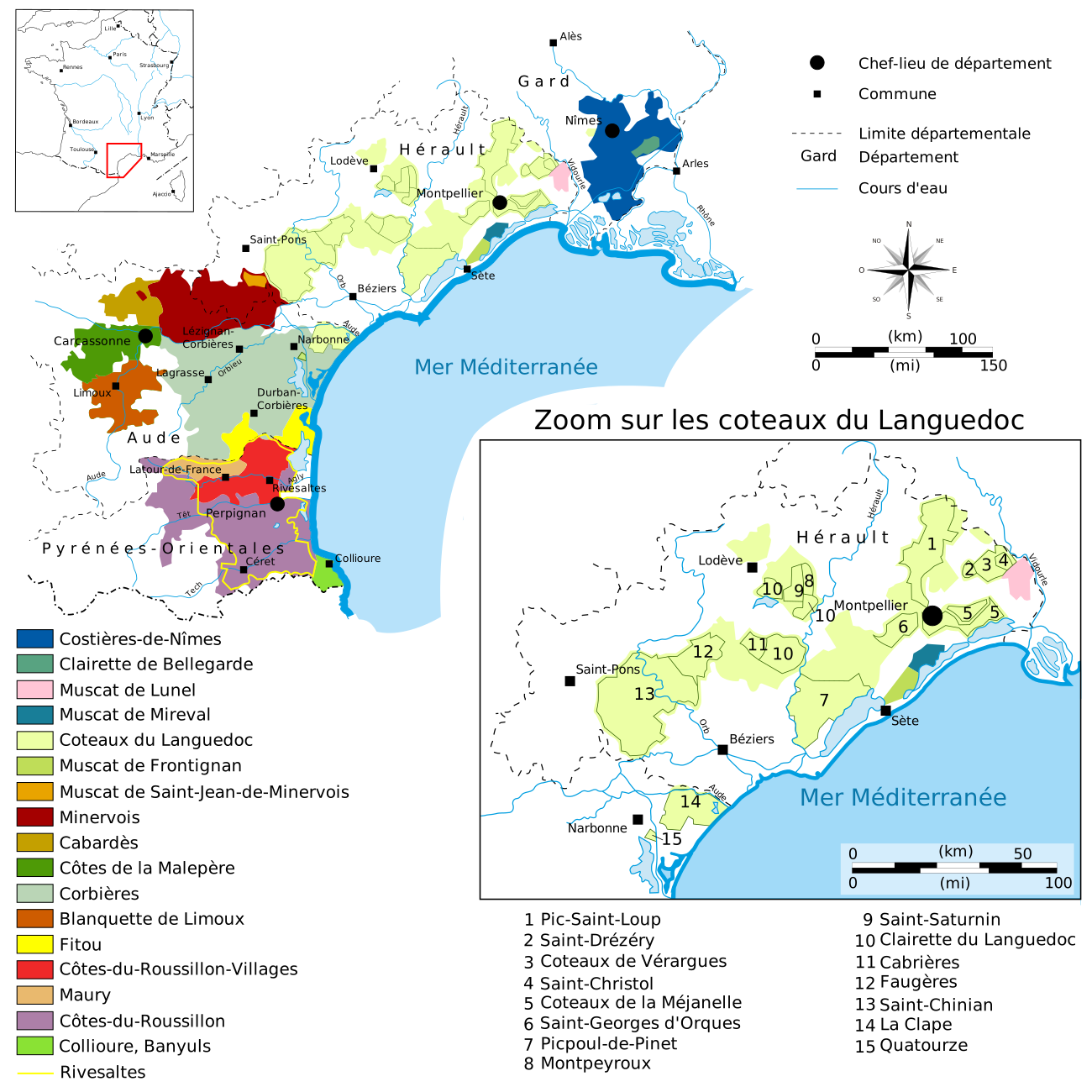
Languedoc gets its name from the dialect spoken there.  The root of the word (Langa d'OC) literally translates to the language of yes with oc being how one says yes in Occitan.  There are 15 distinct AOPs in the Languedoc alone.  Roussillon has 7 AOCs.  Most of the vineyard space hugs the Mediterranean sea.

The  Languedoc's best vineyards in the region are clustered on the western side of the region.  Fitou is the oldest appellation dating to 1948.  It is broken into 2 districts, Fatou Maritime, and Fitou Montagneux.  The wines are always red blends, and Carignan based.  the red wines are a minimum of 60 percent(COMBINED) Grenache (Min20%), and Carignan (Min 20%) but may also include syrah and mourvedre (Up to 10% combined)  No grape may account for over 80% of the blend and Grenache and or Carignan MUST be at least 50% of the total blend.  

Fitou is embedded within Corbieres AOP which produces reds, roses and a small amount of white wine.  Corbieres has variable soil types including red sandstone, stony, grey clay, schists, and coarl limestone.  it is a Mediterranean climate that is dry and windy.  The majority of production from the region is red (95%) and 3.5% rose.  Carignan is the major grape here, and may account for up to 50% of the wine.  syrah, granache Noir, Mourvedre, lledoner Pelut and Cinsault may be included up to 20% for reds and up to 70% for rose wines.  There are also a small amount of whites produced from Bourboulenc, white Grenache, Maccabeu, Clairette, Marsanne, Roussanne, Rolle (Vermintino, Terret blanc, Picquepoul, and Muscat (Maximum 10%).

Corbieres-Boutenac produces red wine from Carignan, Syrah, Grenache, and Mourvedre.  there are only 18 producers here.  

Minervois produces mostly reds  (94%) with 2% white, and the remaining rose.  Grapes used here are Carignan (Up to 40%), Grenache, Lledoner Pelut, Mourvedre, and Syrah.  White may be made of Viognier, Marsanne, Roussanne, Maccabeu, Bourboulenc, Rolle, Clairette, and muscat.  There is also a sweet (VDN) wine mad here from Muscat called Muscat de Saint Jean de Minervois.  

At the Heart of Minervois is a sophisticated area called Minervois la Liviniere.  The soils here are made of limestone.  There is also wind to cool the grapes at night, and significant water shortages in the summer.  Thus the vines suffer... and thus make good grapes.  The wines from Minervois la Liviniere must be bottled at the source, and thus, there are NO NEGOCIANTS here.  Wines are made from 60% Syrah, Mourvedre and Grenache (40 percent minimum of syrah or mourvedre) and may contain Carignan, Cinsault, Terret, Piquepoul and Aspiran (Not to be confused with the Aspirin I will need because of all of the grape types grown in the region)  Finally, these wines are tasted for quality before being called Minervois la Liviniere.

Cabardes is another red producing land with 90% of its vineyards devoted to the red grape.  The soil here is chalky clay, limestone and rocky terroir.  The wind here is overpowering the air dry, and the Mediterranean climate keeps things warm.   Growers grow both Mediterranean and Atlantic varietals.  The growers must grow 50/50 between the two, and must blend the wines.  Interestingly, there is not mins or maximums on the blend however.  One could mix 99 percent Syrah with 1% Cabernet if so desired.

The Cotes de Malepere are similar in style and geographically close to Cabardes (Directly North).  These are made from a bunch (hahaha) of different grapes from traditional Mediterranean to Bordeaux varieties.  Cab, Malbec, Grenache, Syrah and Cinsaut.  The terrain is hills or Cotes, made of Calcareaous material and gravel hill tops.  This is a transitional climate with both Oceanic and Med elements.

Saint-Chinian AOP has historically been a red and Rose world, but have recently added whites to its toolbox.  the same suspects apply with Min 30% Grenache Blanc, Roussanne, Marsanne and vermentino.  Also alloud but with a max of 10% combined are clairette, Carignan Blanc and Viognier.  Depending on the age of the vines, they may also allow Macabeu (If planted before 1998) and Bourboulenc (If before 2005)  The Rose and red wines are from Grenache, Lladoner Pelut (Min 20 percent combined) Mourvedre, and Syrah (Min 20% combined)  Also included at times are Carignan and Cinsault.

There are two sub-regions called Berlou and Roquebrun with slightly different blend rules,  Berlou must have 60% combined Grenache (20% min), Syrah (20% min, and Mourvedre.  It must also have Carignan at up to 25%.  Roquebrun must have a min of 25% Syrah and 20% Granache (70% combined syrah, Granache, and Mourvedre)  It may also have carignan at up to 30%.

Fageres has mountainous influences in its landscape.  wines here are made from Carignan, Cinsault, Grenache, Mourvedre and syrah for both reds and rose wines.  Whites are made with Rousanne, white Grenache, Marsanne and Vermention.  These are soft wines with integrated rounded tannins.

So as you can see, there are a lot of rules, and even more grapes.  It is a place to experiment in France... In fact, one of the few.  That is why there is sooooo much excitement suddenly coming from the area.  If yoiu think we are done with our journey, we are not.  On do Limoux.

Limoux makes 4 varieties of wine;  a cremant, white, rouge and a Blanquette (Sparkling in the ancestral method made from Mauzac grapes.The two sparkling wines from the region (Blanquette and Cremant) go to assemblage after the still wines are made.  After nine months, existing lees are eliminated and an expedition is added.  the Cremant is stored for at least 12 months and sold 15 months after it is bottled.  Blanqette undergoes natural fementation and has less then 7% alcohol.

Clairette du Languedoc hugs the herault river on cliffs or terraces.  The grape grown here is easy to remember because it is called Clairette. This is a rare single varietal wine from the region.  It is a white, and it has been here since the Roman times.  It can either be drunk dry or semi-sweet.

Languedoc Regional AOC has made wines that were uninspired for years.  In recent years, the focus has been on improving quality.  There are several sub-zones including Gres de Montpellier (St Christol, St Drezery, st Georges d' Orques and La Mejanelle), Penzenas, La Clape, Pic St. Loup, Cabrieres, Terasses du Larzac, Quatourze, Montpeyroux, st. Saturnin, and Sommieres.  Hold on to your hat, we will go through these quickly.

Languedoc AOP makes white and red wines as well as rose.  Whites are made up of Granache blanc, Clarette blanc, Bourboulenc, Piquepoul, Marsanne, Roussane, Vermentio and Tourbat.  These have to be a blend of two or more of the grapes listed above.  Secondary grapes may be included as well.  These include Terret, Carignan, Ugni, Macabeu, Viognier.  Seconday blending grapes cannot be more then 30% and viognier cannot be less then 10%.the wines should be a minimum of 11.5% ABV.  Reds and Rose wines can be made from Grenache, Lladnoer Pelut, Syrah, Mourvedre(At least 50%), and Carignan can be no more then 40%.  Minimum of 20% Frenache and Lladdoner Pelut.  Secondary grapes may not exceed 10%  These include Counoise, Grenache rose, Piquepoul and Terret.

Picpoul only grows one grape (Picpoul de Pinet).  It is made for fish with its floral, citrus and acid.  The bottle is COOL and has Neptune with the Languedoc Cross.

Pic Saint Loup AOP has Mourvedre based wines showing color, spicy and meaty complexity with a hint of earth.  They are more elegant than the rest from the Languedoc plains.  This is due to swings in temperatue from day to night.  A great part of this region is a birthday celebration for me.  On the first Sunday after March 19th (My bday), anyone climbing the Pic Saint Loup gets a glass of wine at the summit.

La Clape mountains are known as the mountains of lakes because they used to be under a lake.  This region is known for its whites made from 60% Bourboulenc.  it also makes reds and rose but they are less interesting.

Finally, BREATHE, there are a series of Muscat producing small fortified wine appellations called the Languedoc Muscats collectively.  These include Muscat de St-Jean-de-Minervois AOP, Muscat de Mireval AOP, Muscat de Lunel AOPand Muscat de Frontignan AOP.  These can be either VDN or Vin de Liquer (Natural or with fortification added).

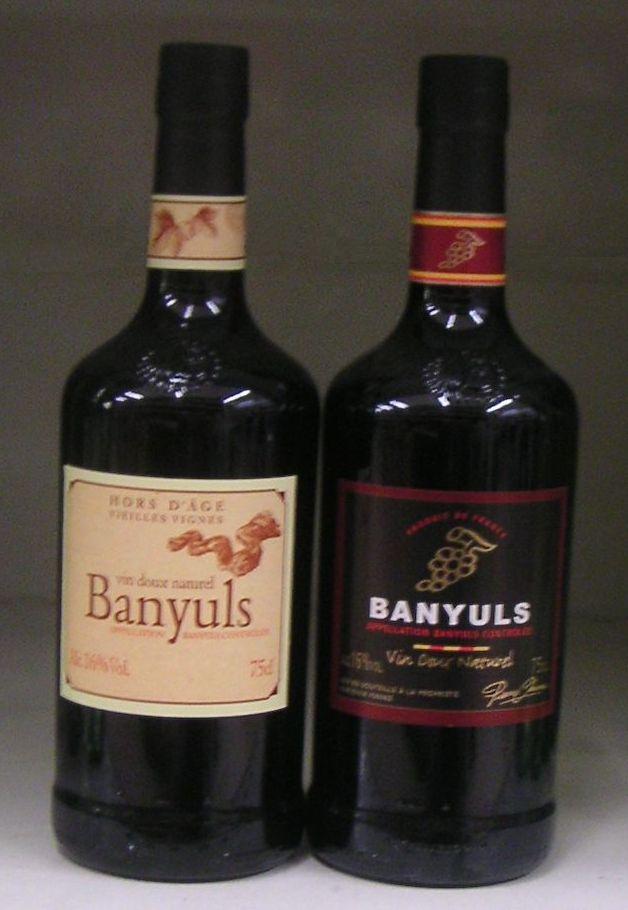
Roussillon is next.  Roussillon AOPs is made up of several sub AOPs.  These include Banyuls Grand Cru (VDN red, Banyuls (VDN red and white), Collioure (Red, white, rose), Cotes du Roussillon (Red, white), Maury (VDN white, VDN red, dry red), Muscat de Rivesaltes (VDN white) and finally Rivesaltes (VDN white and VDN red).

Collioure makes whites from Grenache blanc, gris, and secondarily  from tourbat, Maccabeu, Roussanne, Marsanne, and Vermentino.  Reds and Roses can be made from Grenache Noir, and secondarily from Syrah, Mourvedre, (Carignan, and Cinsault for reds,) and (Granache Gris for rose).

Cotes du Roussillon make 60% roses, and 38 percent red.  Grenaches noir and blanc, Carignan noir, Llandoner Pelut, Cinsault, Macabeu, Malvoisie du Roussillon.  New grapes are also added like Syrah, Mourvedre, Roussanne, Marsanne, and Vermentino.

Cote du Roussillon Villages AOP makes Carignan noir, Granache noir, Lladoner Pelut, Syrah, and Mourvedre.  there are 32 villages and typically the village is included on the label.

Cotes du Roussillon les Aspres must be in oak for 12 months and are made with a higher degree of Syrah and Mourvedre.

Sweet wines as mentioned above are made through much of the region.The Ambre and Touile styles are aged in an oxidative environment until March 1 of the 3rd year following the harvest.  Grenat wines are aged reductively for one year and must be bottled before juen 30 of the following year.  These wines are at times aged in the sun in a glass jar (HUMPH).  Rivesaltes hors d'age AOP wines are aged for a minimum of 5 years and at times up to 20.

The last sweet wine region to discuss is Banyuls Grand Cru AOP.  These must be made with 75% Grenache Noir and have been aged for a minimum of 30 Months.

Maury AOP may be aged up to 20 years, but the Cendanges ou Recoltes bottled early to preserve freshness.

Whew.  Lots of wines made here...  Thanks for coming with me. 

Friday, February 27, 2015

Provence

PROVENCE

Provence always comes to me as a culinary capital of France with fantastic seafood, truffles, and heavy influence from its Mediterranean neighbors.  I would also be remiss if I did not give props to herbs like thyme, sage, rosemary, basil, savory, fennel, marjoram, tarragon, oregano, bay and above all, Lavender.  I have never been, but when I think of it, it seems to be the place of my culinary dreams.  I have frequently said in a wine cave in Italy, or a wine cellar in Napa, if you had to die, this would be a beautiful place to do so.  This is the same way I have always envisioned Provence is, but with food.

What I did not fully imagine, is the same could be true of wine.  Duh, a place with good food also finds itself immersed in wine culture as well.  In Provence however, it was the wine that came first.  This wonderfully beautiful city perched above the Mediterranean, was founded to support, of all things, the wine trade.  The Romans planted grapes here in 125BC, and built the city to be able to ship wine back to the motherland.  Upon the fall of the Roman empire, there was a time that Provence stops making wine,.  Later the church took over production, but it was not until the Mediterranean beauty starts bringing these wonderful creatures called tourists, and the wine industry starts to boom.

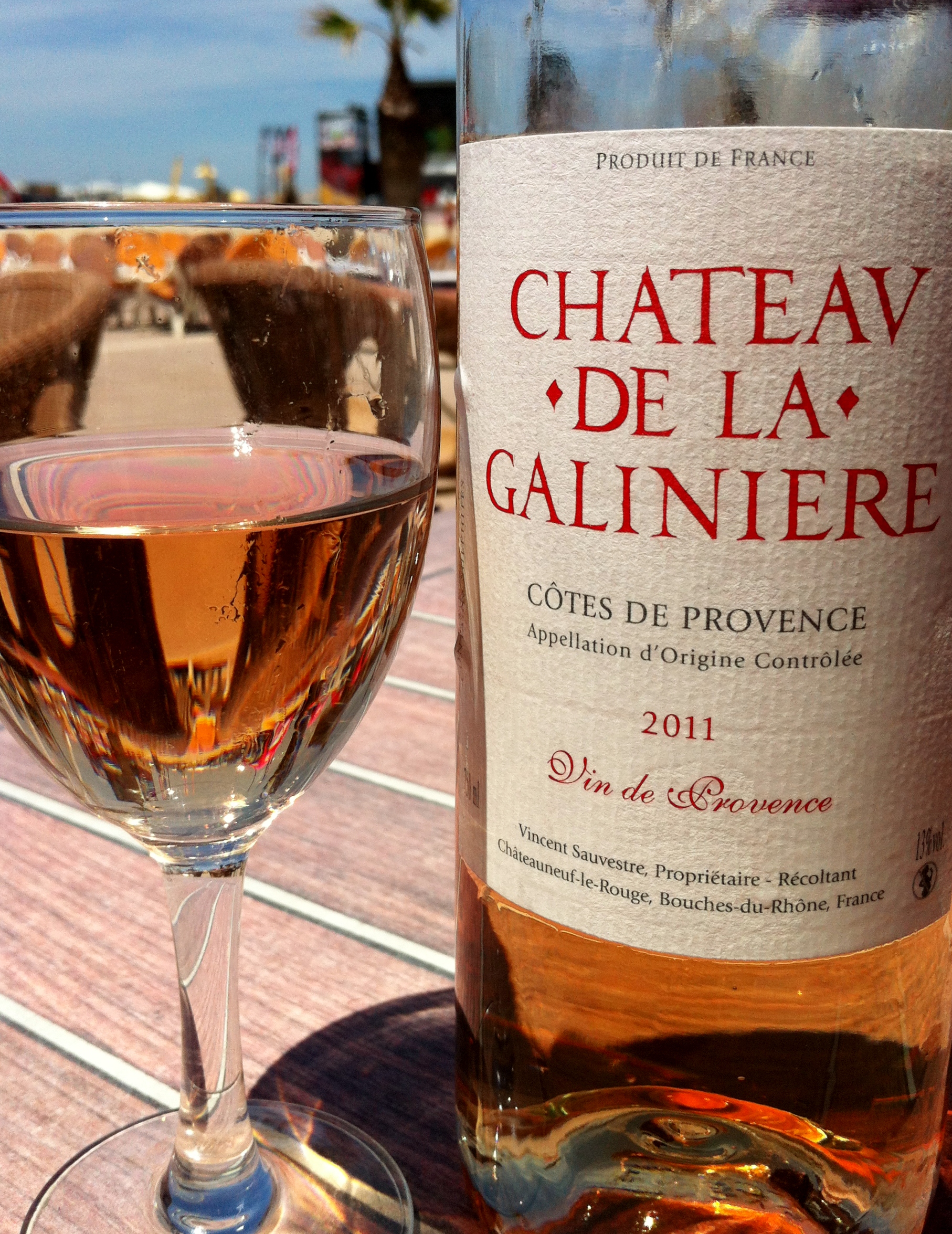
The biggest appellation is called Provence AOP.  Over 75% of the wine production of the region is Rose'.  The wines of this region must be a mix of at least two types of grapes.  Those may be chosen from Cinsault, Grenache, Morvedre, Syrah, and a local grape called Tibouren which locals say smells like herbs d' Provence.  This herbal scent will often be described as a nose of garrigue.  Frequently served in hourglass bottles, these rose wines are good provincial dry pink wines, but are not great wines in a classical sense.  However, if you are sitting in a Mediterranean climate with a cold one in your hand, looking at the ocean, well, you could see that it would not suck in any way.  It might even make the wine taste fabulous.

Unlike the provincial rose, a wine that is a star is a red wine that comes from Bandol AOP.  Bandol does produce rose' wines but the wines to take note of are the REDs.  The Bandol red must be a minimum of 50% Mourvedre, a grape that tastes fantastic if you have not had one, but may be paired with up with Grenache, Cinsault as well as less frequently with Syrah and Carignan.  Mourvedre is a hard grape to grow very difficult grape to grow as it is susceptible to a lot of pesky agricultural issues.  It produces wines that have a lot of character with a high degree of tannins.  These wines therefore need time in the barrel and are not able to be released until 18 months of aging, and frequently require much more aging time in the bottle to tame the wild beasts that they are.  Speaking of wild beast, you will often hear that these wines are plummy, dense, and frequently are described as smelling like or of animals. YUMMMMMMMMMMM!

Another interesting area of the region is the Coteaux d'Aix-en-Provance AOP and within it the sub-appelation of Baux de Provance AOP.  This area is as interesting for its politics as it is for its wine.  Vignerons in the area have been trying to mandate organic production but have been unsuccessful in doing so.  They make rose, red and recently added the ability to make reds under this AOP.  the grapes are as follows:  Grenache, Syrah and Cinsault for reds, and Grenache Blanc, Clairette, Cermentino, and Roussanne for the whites.  Interestingly, the most famous maker in the area, Les Baux de Provance got impacted by a change in rules in 1995 to insist on Mediterranean grapes only and must bottle its Cabernet under the vin de pays.


Other AOPs in the area include Cassis (75% whites) produces wines in limestone soil from Clairette, Marsane, Ugni blanc and Sauv Blanc. Palette which produces 3 colors in similar quantities.  Reds from this area are predominately grenache and Mouvedre and may contain Cinsaut.  Whites are at least 55% Clairette, but can include a party of others as well.  Finally,  Bellet which produces all 3 colors, but its street cred comes from its whites.   The settlers here are of Italian decent and they frequently use Vermentino known locally as Rolle.

The geology of Provence is largely sand and sandstone along with granite.  Limestone is frequently found in the best vineyards.  Additionally it is usually warm in the summer with mild winters with plenty of sun to ripen grapes. 

Friday, February 20, 2015

Rhone Valley

RHONE VALLEY

Wander into a French Restaurant anywhere in the world be it France, or Highland Park, Illinois USA, if you know wines and what goes well with provincial cafe food, you are likely to order a Cote.  Not a COKE, but a Cote.  If you are in-the-know this is the way to indicate to the server that you would like a Cote du Rhone.  These wines are Ubiquitous in french cafes and are generally a nice value wine.  With that, comes the wonderful reputation of being average at best cafe wines.  They won't excite or offend anyone.  While this is true for many wines in the region, the Rhone Valley goes way beyond the Rhone hills, and offers both great values as well as exceptional, interesting wines that people are happy to sit and talk about forever, and ever.

I remember my first experience with the Rhone valley beyond Cote-du-Rhone.  I was in, of all places, Napa Valley and we decided to head over to a restaurant called Tra-Vigne where a young and interesting hot-shot chef was doing some incredible things.  The chef's name is Michael Chiarello, of TV fame, but this was before all of that.  My wife and I ordered a paparradelle with a lamb ragu that was screaming for a glass of wine.  When the Sommelier came over to chat, he said:  

Brian:  "Hi, I am Brian, and I will be your WINE GUY tonight."  

Me: "Wine guy, are we to young for you to be a sommelier?"
Brian: "nope, I am too young..."  
We all laughed, and we told him that we would not be having wine with dinner because we had been drinking CA wines all day.
Brian:  "What I am hearing you say is that you don't want anymore California wine today, and you don't want a lot of any wine, but I cannot let you have that pasta without any wine at all.  That would be a crime!"

God Bless that man.  he was right.  What he brought us was an old Vieux Telegraphe Chateauneuf du Pape half bottle to go with dinner.  He said it was a wine-nerd's wine.  Brian told us that he and his buddies spend hours pouring this wine and sipping it, watching it change in the glass, and debate its flavors and smells over the course of the evening.  IT WAS GREAT.  I had never had anything like it.  I did not even know it was from the Rhone Valley.  I just knew I wanted more of it.  More on Chateauneuf in a bit.

Back to the Rhone.  It can easily be separated into the Northern and Southern Rhone.  The two regions do not touch at all in fact, and if they did not share the same river aptly named the Rhone, they would likely be considered two totally separate AOPs.  Geographically, they are separate, They grow different grapes, the soil make up is different, and the climate is vastly different.  Finally, the North makes some of the best wines of the region, but only accounts for a paltry 5% of the total yield.

Lets take climate first.  The north is more of a continental climate.  The North has more varied seasonal change, a lot more rainfall, and fewer daily hours of sunlight giving the grapes longer hang time.  The Northern Rhone also has strong winds called Mistrals that blow so hard that many of the trees in the area lean southward due to the wind's strength.  While this can strip the vines of their fruit, it also serves to ensure that the rains do not bring with them mold or rot.

The soil of the northern Rhone is made up of Schist and granite.  Many of the vineyards are on hills that hug the river, and almost defy gravity in their ability to stay up.  The three AOPs with the steepest slopes and therefore the best wines are Hermitage, Cote-Rotie and Condrieu.

The top grape grown is by far Syrah.  Many feel there is no better Syrah anywhere in the world then in the norther Rhone.  These wines are full-bodied, savory and have flavors of Meats, smoke, olive, lavender and peppercorn.  Some say rubber and cigars as well.  

Cornas AOP bottles Syrah as a 100% varietal wine while the other appellations allow a small percentage of white grapes to be blended in.  Ironically, those white grapes deepen the red color of the wine and stabilize the tannins.  Cote Rotie will add up to 20% Viognier (One of my favorite white grapes) while the remaining areas add Marsanne and Roussane.  These grapes are almost always co-fermented in whole clusters and many times include stems.

Steep Cliffs of Cote-Rotie
At this point I think it is worth recognizing some of the communities in the Rhone.  We will start in the North with Cote Rotie (Burnt Cliffs).  These are the steepest vineyards of any in France.  I am not sure if it is called the burnt cliffs because of the sun, or because of people falling down and leaving blood in the soil.  At times the gradient is 55 degrees or more, and all of the cote's vineyards are harvested by hand.  Talk about a hard day's work.  

The Cote-Rotie is broken into two parts, the Cote Brune (Brunette) and Cote Blonde (I will assume you can translate), allegedly given to the two daughters of  some important dude.  One blonde and one brunette.  Some say the soils are darker on the brunette side.  Most importantly, the Blond side makes lighter more elegant wines, while the brunette side makes more assertive, bolder wines.  This area rivals some of the first growths of Bordeaux in their beauty and complexity.  La Mouline, La Turque and La Landonne are among three of those places.

Hermitage, so named because of a Hermit who lived in a chapel in the area, is another community worth noting.  They also make an exceptional Syrah blended with up to 15% rousane and Marsane grapes, as well as a beautiful white from Rousane (Acid) and Marsane (Richness, think Marzipan).  there are 4 producers who dominate the area.  They are Negociants Delas, M. Chapoutier, Jaboulet, and Jean-Louis Chave who is the only major grower who bottles his own wine.  (This part is thanks to my friend Jim)  If you don't want to pay Hermitage prices, you can also seek wines made in its little brother AOP called Croze-Hermitage.  These wines are less predictably great, but the great ones take Syrah into the bacon flavored realm, and who would ever say no to bacon.

Cornas is famous because they only allow Syrah in their wine.  No blends here.  These are wines that need to be laid down for years.  They are almost unapproachable in their early years.  Also notable is that Cornas is the warmest region in the north due to the hill shielding it from the Mistral, and the fact that the land is made largely of uncovered granite (Gore).

St-Joseph is a lesser region in the north so I am going to skip it.

Condrieu AOP is a white ONLY region.  As I mentioned before, right now my favorite white is Viognier.  Condrieu is just south of the Cote Rotie.  The wine is Honeyed with a lusciousness and finishes with a floral bouquet.  It is finished with Oak, and MLF to give a creaminess to the winemakers taste.  Sometimes people will say that Viognier is the more interesting, sultry sister of Chardonay.  Graaaaaaawwwwwwllll.

St-Peray and Chateau-Grillet are also AOPs but less interesting.

The last region to pay tribute to is along the Drome river.  It is actually 4 sub appellations Coteaux de Die AOP, Cremant de Die AOP, Clariette de Dia AOP and Chatillon-de Diois AOP

Clairette de die provides 2 types of sparkling wines, method traditionnelle (See how Champagne is made) and Methode Dioise Ancestral which must contain 75% Muscat a Petit Grains (Weird grape).  They are bottled before fermentation is complete, disgorged, and hit with a dosage of 35g/l making it a semi-sweet wine.  Traditionnelle is basically Brut in style.

Chatillon-en-Diois makes Gamay based reds, rose's and whites from Aligote and Chardonnay.

Moving to the Mediterranean climates of the southern Rhone, a lot shifts.  First, it is WARM.  One can dream as it was -7 degrees Fahrenheit today when I woke up in sunny Chicago.  The vineyards fan out from the river and cover far more geography.  Granache is the predominant grape but Mourvedre and Syrah also play their parts.  Some communities allow for up to 19 different grapes in the blends that they produce.  Unlike the north, this is a region that relies on the blend to make a balanced and beautiful wine.

Chateauneuf de Pape Vineyard with Galets
The mistral blows so strong through the south that some farmers are forced to plant the vines on an angle.  The soil is made of deposited limestone over sand, gravel, and clay all left by the river over the years.  Finally, large stones are found in some of the region called Galets, and are most notable in Chateauneuf-du-pape.  These Galets were deposited in the ice age by the glaciers and they are thought to store heat for the cool nights.  This may account for the high alcohol content of the wines in the region.

I will break the region into a few parts.  First, we will start with Chateauneuf-du-pape (Chateau of the new pope)since it started my love for the region so long ago.  7 notable producers make some of the best wines of the region.  Chateau Rayas, Chateau de Beaucastle, Michel Chapoutier, Domaine du vieu telegraphe (Mmmmm), Chateau La Nerthe, Domaine Charvin, Domaine de Marcoux.

The region produces both red and white wines and has 13 accepted varieties to blend from.  Grenache is usually the principal variety in the red wines of the region, however, Chateau de Beaucastel Rouge is dominated by Mourvedre and uses every one of the authorized varieties.  Chateau Rayas is almost always a 100% Granache.  The minimal ABV in Chateauneuf is 15.5% with many reaching 15% or higher.  Giddeyup!

The 13 grapes that can be used are as follows.  Deep breath... Granache (Noir, Blanc, Gris)
Mourverdre, Syrah, Cinsault, Counoise, Picpoul (Noir/Blanc/Gris)
Terret Noir, Bourboulenc, Clairette/Rose, Roussanne, Vaccarese, Picardan, Muscardin.   (BREATHE)

Gigondas is similar to CDP, and a lot cheaper, as is Vacqueyras.  Both of these villages used to be part of the generic Cote-du-Rhone AOP.

Cotes du Rhone AOP is the largest appellation.  Over 2/3 of the production of the Rhone is produced in this AOP.  It is also the wine I discussed at the beginning that is found all over the restaurants and cafes of France.Cotes du Rhone Cillages AOP is a superior designation for red, white and rose wines from a smaller area within the Rhone.  There are 18 appellations that attribute their designation the the CDR-Villages AOP.  Major grapes grown here include Grenache, Mourvedre and Syrah.

Beaumes-de-venise and vinsobres AOP are new appellations that joined in 2005 and 6 respectively.  They produce a wine that has a minimum of 50% Grenache with high alcohol.  Lirac is a small community with a dubious past.  They produce medium quality white, red and rose wines, but in 1863, Lirac is thought to have been the gateway for phylloxera getting into France.  Phylloxera is a devastating parasite that wiped out many of the vines of France.

Tavel makes only rose wines made from Grenache.  These wines are dry and said to be age-worthy.

Vin Doux naturals, Rasteau and Muscat de Beaumes de Venise are fortified wines, but the two communities also make wines in a traditional manner.  If you see AOP, know it is traditional.  If you see VDN, know it is similar to a port.  These wines are fortified with Brandy.

Clairette de Bellegard makes wines only from a grape called Clairette and is known basically for that region alone.  Talk about marketing.


There are other small regions, but I will not go into those right now.

All-in-all, the Rhone Valley has wines that one could drink every day.  They are good, affordable, and go with most foods.  In a country like France, they are the go-to wines.  More interestingly, there are wines that are unforgettable.  Wines in the north from Cote-Rotie, and Hermitage as well as Condrieu.  And in the south, Chateauneuf-du-Pape among others.

Explore.  It is only wine.


Tuesday, February 17, 2015

Bubbly

CHAMPAGNE

One of my favorite children's books is a called A Beautiful Oops.  It is a book we read often to my two boys when they make a mistake that they see to be the end of the world.  Their mistakes can cause temper tantrums, disagreeable behavior, quitting, or just the inability to concentrate on the task at hand.  They will say something like, "EPIC FAIL" with attitude, and run away...  In the book,, author Jamie Lee Curtis, yep same one, says that we should think of a mistake, as an opportunity to make something beautiful.  She and her illustrator show countless examples of ripped pages, spills, ink stains, and they use the shape to make animals, words, and other inspiring creations.

Why start this article about Champagne with a story about a kids book?  Great question!  Champagne is perhaps the most beautiful oops ever in the wine world.  It is proof, that a mistake should be looked at as an opportunity to make something beautiful.  The originators of this magical elixir took the book to heart.  Yeah, I know, the book wasn't around back then, but the message most certainly was.  What comes out of the story is the drink people turn to for celebration.  Perhaps, what they are celebrating is not only a wedding, or a birth of a child, or winning the world series, but also the celebration of the triumph of the originators of the first modern Champagne as a modern triumph over an almost certain "EPIC FAIL".  They just don't know it...YET.

250M bubbles per bottle of Champagne
Our fairytale begins in Champagne France c. 1550s when sparkling wine was made accidentally.  It gets very cold in the region, and sometimes people would bottle wines before the fermentation was fully complete.  When the spring came, the bottles would warm, and the fermentation would begin again.  When yeast ferments, it changes sugar into alcohol and CO2, and thus bubbles.  OOPS, We have champagne... Well sort of.  In reality you have sparkling wine, but, due to the sparkle, you also had exploding bottles, and popping corks, and you would also have fine lees (Sediment produced by dying yeast falling to the bottom of the barrel).  That beautiful clear bubbly that we are all used to was certainly not what was being produced in the 1500s.  Fast forward to the 1660s when the ENGLISH, not the French, were able to make glass that would withstand the pressure from the fermentation, and in the 1800 when the Muselet (muzzle) was developed to keep the cork in the bottle where it belongs.  Additionally, they were able to figure out how to make the lees come to the top of the bottle and remove it after secondary fermentation was complete to give us the clear liquid Champagne that we currently know and love.  

Why did the original makers decide to go all-in on bubbles.  Their wines were not at all good.  Compared to the wines that their neighbors were making, they were thin and acidic largely due to the fact that they did not get enough sunny days to mature the grapes like their neighbors did in Bordeaux or in Burgundy.  As a result, they tried something different.  Something that would pay off in spades.

All Champagne is made from a combination of 3 grapes.  Pinot Noir and Pinot Meunier which are both red grapes, and Chardonnay (White).  Why is it white if it is made from red grapes?  First, not all Champagne is white.  And not all Champagne is made using red grapes.  When it is white,  they take the red grapes and press them in a certain fashion to remove the juice from the skins quickly.  Since the pigment in red wine come from contact with the skins, if the juice never touches the skin, all grapes produce "white wine".  Rose Champagne allows the red grapes to touch the skin for a little while, and Blanc de Blancs is made only from Chardonnay.

King Dom Perignon
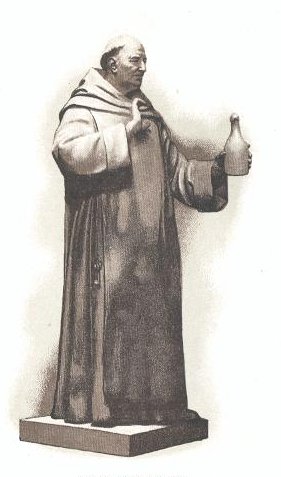
Which leads us nicely to the story of Mr. Dom Perignon himself.  Yes it is a great example of Champagne, yes it is correctable and expensive, yes it is yummy, but did you know He was an actual person.  A monk in fact, and he was in charge of the wines at the Abbey d' Hautvilliers.  Dom, and I can call him that because we are on a first name basis, was the first person to realize that the spring fermentation was a blessing, and one that the region could take advantage of, and not the curse that many thought it was.  Mr. P did a few things for the region.  First, he was the first to blend wines from different vineyards (Assemblage) to increase the flavor.  Second, he realized that if one presses rapidly, the wines would remain white.  So Mr. P is like the king of our fairytale.  Long live king Dom.  Foreva!

There are 9 styles of Champagne that you should know about.  Non-Vintage (NV) is generally in a Brut style.  It makes up three quarters of total production.  The house blends wine from multiple years to achieve consistency across years.  the second is Vintage.  100% of the blend must come from the year stated on the bottle.  In any one year however, the house is only permitted to use 80% of the wine it produces.  The rest must be held for blending in other years.  Most houses only release a vintage during fantastic years.  The vintage champagnes are also usually brut in style and can be aged for a decade or more.  Blanc de Blancs is always 100 percent Chardonay.  They can be both vintage and non vintage.  these beautiful bottles can be aged for decades, and take years to develop past their rough beginnings.  The fourth type is Blanc de Noirs.  These are white Champagnes produced only from red grapes.  These are more weighty and masculine wines that lack the finesse and elegance of Blanc de Blancs.

The finest and most prestigious of the offerings is the prestige Cuvee (Tete de Cuve.These are usually vintage labeled, but not always.  They are also frequently aged for years prior to their release.Not all houses produce a prestige offering, and even those that do, often only produce in a fantastic year.  These wines can be Blanc de Blancs, Blanc de Noir, or rose.

Single vineyard champagne are produced both by large houses and smaller growers.Clos de Goisses is perhaps the benchmark for these types of wines.  Single vineyard Champagnes stand in stark contrast to the philosophy of blending that is prevalent in the region.

The seventh style of Champagne is Special Club Prestige Cuvee which originated in  1971.  This is a community of producers that promote their prestige cuvees with identical packaging, so that they can share in the cost of production and promotion.

The last two include Rose Champagne.  these can come in vintage, NV, and Prestige cuvees.  The rose is almost always achieved by blending white wine with red wine.  Champagne is the only region in France that allows the blending of reds with whites.  Rose wines are the most expensive of all Champagnes.  Finally Cremant de Champagne is a half sparkling wine.  A spritzer if you will.  You will hear them referred to as creaming as opposed to sparkling.

Champagne can also come with different levels of sweetness, these include in ascending order of sweetness:
1.  Brut Nature (less than 3g/l
2.  Extra Brut  (0 to 6g/l of sugar)
3.  Brut (6-12g/l)
4.  Extra Dry (12-17g/l )
5.  Dry/SEC (17 to 32g/l)
6.  Demi-Sec/Half dry (32 to 50g/l)
7  Doux/Sweet (50+)

Houses are aloud to be +/- 3g per liter variance on what is listed on the label.

You can still find still bottles from the region as well.  Coteaux Champenois are still red and white wines, while Rose des Riceys are still rose wines coming from the community of Riceys.

Due to the weather Acid levels can remain quite high.  Anyone who has tasted Champagne can attest to that.  This is why Champagne pairs so well with so many different foods.  Winters can be cold, and the average temperature hovers around 52 degrees F.Soils are Belemnite (Fossilized sea creatures).  These soils reach very deep in many parts of the AOP.  This allows for a lot of water to reach the vines, storage and reflection of heat, and it allows for caves to be dug to store the bottles that remain at a constant temperature of 52 degrees.

There are 17 Grand Cru villages in Champagne.  This includeAmbonnay, Avize, Ay, Beaumont-sur-Vesle, Bouzy, Chouilly, Cramant, Louvois, Mailly-Champagne, Le Mensnil-sur-Oger, Oger, Oiry, Puisieulx, Sillery, Tours-Sur-Marne, Verzenay, Verzy.  There are 44 Premir Crus, and the rest of the AOPs are unclasified.

Prices of Champagne grapes are fixed.  Every year the price and yield are determined by the Civic and the INAO.  The Champagne Houses (Wineries that make Champagne) will pay a persentage of the set price based on where the grapes come from.  Grand Crus are priced at 100% of the set price, Premirs are 90-99% and Not classified at 80-89%.  Champagne houses negociate at the time of pressing for the price of the grapes.

After the harvest and the primary fermentation, the wine is bottled after adding sugar, yeast and nutrients, which ensures the secondary fermentation (Prise de Mousse)  The additions are called the "Liqueur de Triage).  After secondary fermentation is complete the maker allows the Lees to sit in the bottle for a mandatory 15 month period of time.  This helps flavors to develop and allows the Champagne to mature.  For vintage Champagne the time on lees must be at least 3 years, but many spend even more time than that.

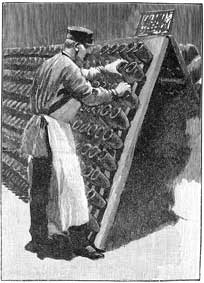
At this point one needs to remove the lees from the bottles.  this is done through a process called Remuage or Riddling.  The Remuer (Person who does the Remuage) turns the bottles methodically to dislodge the dead yeast cells at the bottom of the rack.  Slowly through turning, the bottle will eventually be upside down (Sur Pointe).  When this happens, the yeast can be removed (Disgorged).  To do this, the Champagne house freezes the neck of the bottle to take out the yeast plug.

We are almost done.  At this point, a small amount of sugar may be added with some wine called the Liqueur de dosage, or the Liquer d' expedition.  Depending on the amount of this liquid added, will determine the sweetness of the wine (Brut, sec, etc.)

When this is done, the wine is corked and fitted with a muzzle (The wire thinga-ma-bob).  Afterwards, the bottle is shaken to ensure the Liqueur d' expedition is mixed, and to ensure that all of the lees have been removed.  After that, the label is put on the bottle and the foil is applied to the cork and muzzle.

As luck would have it there are also different types of Champagne producers.  I think they do this so that I will have more to memorize about a wine that I am not so crazy about in the first place.  I usually am the person at a wedding that will say cheers and clink glasses with some Cabernet while everyone else has Champagne.

The producers can be NM (Negociant Manipulant) who buys grapes from growers.  Some own a portion of their own grapes, and some not at all.  Many of these are big corporations with multiple labels housed under them.  RM (Recoltant Manipulant) is a grower who makes Champagne from estate grown fruit.  They must have 95% of the grapes coming from their own vineyards.  CM (Cooperative Manipulant) that represents a bunch of growers producing under one brand.RC (Recoltant Cooperateur)  These are a group of growers that vinify together but they label under their own house.  SR (Societe de Recoltants) see above but instead of a coop, it is a corporation set up by a union that causes the collective.  ND (Negociant Distributeur) these are middlemen and they distribute wine that they did not make.MA (Marque d Acheteur);  House brand, think generics in a grocery store.

I hope you enjoyed my story of the beautiful oops that is Champagne, and that you live happily ever after.  THE END!


Friday, February 6, 2015

Burgundy

Burgundy

When you talk to someone about Burgundy, he may use certain words to describe the wine that will remind you of how people talk about sex.  That is right, I said SEX.  I am not sure why, but they do,  it is true.  Almost everyone who has had very fine Burgundy wine will tell you afterwords, they needed a moment, or they stopped eating.  They had to focus on just drinking their wine, or they wanted to be alone with the glass... WEIRD, Right?  So if Burgundy is the kind of wine that is Sexxxxxxxxxxxy, why doesn't everyone drink it?  Why do we not have more people espousing it s appeal?  Why is it not something that you have experienced?  All good questions.  Frankly, while I am writing about the sex in a bottle that is Burgundy, I must admit, I myself am a fine Burgundy Virgin.  That is not to say I have not dabbled in Burgundy.  I have.  I just have not had the experience that would lead me to talk about wine in the way I have described others talking about it above.  So, why the disconnect?  Here is the skinny on Burgundy.  Burgundy is a place that makes some of the most talked about wines in the world.  Not only are the wines discussed, revered, objectified, and sexified (OK not a word, but you get the picture), but the Grad Cru and highly prized 1er Cru can sell for thousands of dollars.

But, and this is a BIG but, Burgundy is the one of the furthest north wine growing region that makes fine wines in the entire world.  Especially, fine red wines.  What does this mean?  It means that it is very difficult for the grapes to mature.  What that means is that while you might have a fantastic Burgundy from a Grand Cru vineyard in 2009, you might find the the following 10 years never produces ripe enough fruit to do it again.  Thus, people spend a lot of time, and a lot of money buying average Burgundy wines.  Why?  Why would they do that?  Why not just go to Bordeaux, or California, or to Portugal, and get a wine that is more predictable?  

It turns out that a rat will die if you give them a button to press that will cause them pleasure of the sexual variety.  They will press the button over and over and over again, forgetting about food, water and rat clothing... From what I can tell Burgundy is exactly the same way.  People are more than willing to suffer average wines from Burgundy, and keep pressing the Burgundy button in search of that 1 SEXXXXXXY bottle that a person might find in a year.

To make matters worse, even if you pick the right vintage, and the right bottle, Burgundy can go through an awkward phase.  Even the right bottle can have a bad hair day.  Think attractive people circa 1987 in their Zubaz pants and their bad glasses.  If you open the bottle then, it might not go so well, but if you are lucky enough to have waited, the wine might taste like sexy time.

This is the allure of Burgundy.  This is why a bottle of red is described as tall dark and handsome, or whatever floats your boat.  This is why the region has such a cult following.  This is why wine nerds can't help but talk about the wine like it has a life of its own.  This is why it has a sex in a bottle reputation.  Burgundy is all about place (Terroir), and a little baw-chicka-bow bouw, and the time it is opened.  No other region on earth has this reputation, complexity or allure.

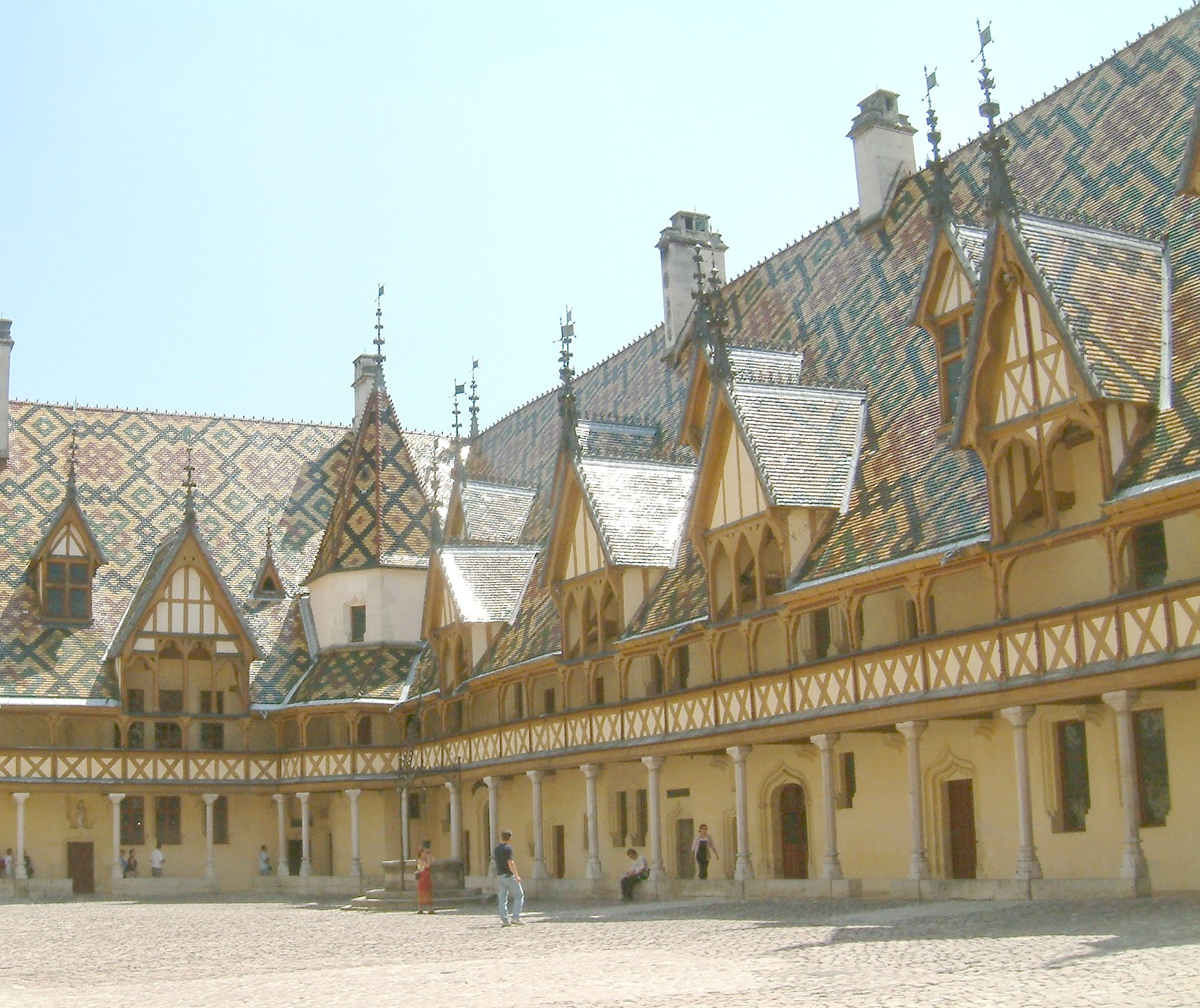
It is important to note that with all of this talk about sex and wine, that Burgundy was first developed, farmed, and turned into a wine making region by the Catholic Church (IRONIC).  The Benedictine monks founded Burgundy, and noticed that different places created wines with different flavors and textures.  Therefor, Burgundy is all about PLACE.  the Grand Cru travels with a parcel of land and not with a family or a label like in Bordeaux. Since family laws used to dictate that a family must split its assets amongst its children evenly when parents die, it is not unusual for a grand Cru to be split, and made under similar names, but different conditions.  This makes finding the great wine that you have had in the past even more difficult.  There are people who study Burgundy for their lifetime and never get all of the information that they seek, so I will not pretend to be an expert, or even a beginner, or that I can even spell Burgundy at this point, but I will be happy to pass on a little of information that hopefully will serve you well with a pretentious Fracophile at a dinner party and give you a fact or two to point out his douche baggery one night.

For the purpose of this discussion, I will talk about three major regions of Burgundy.  First is Chablis, which has largely gotten a bad name in the United States.  The reason has NOTHING to do with the wine of this region,  rather the reason is because white jug wines that our grandparents used to drink were always called Chablis.  These wines were bad, and had not a single ounce of Chablis in them.  We need to get over that as a country and move on.  Chablis from Chablis are a beautiful food wine made from the darling of all white grapes...Chardonnay.  Frequently they are aged in Stainless Steel (un-oaked).  Due to the cold climate, the grapes mature slowly, and sometimes insufficiently leading to high acid wines.

As grapes develop, the acid content dips as the sugar content rises.  Since the grape matures slowly, the fruit does not lose its acid like it would in sunny California.  The Chablis wines are often described as having the flavor of lemon curd and frequently their mineral flavor is described as oyster shell.  I have never licked an oyster shell, so I will take their word for it.  The reason oyster shells are included in the description is that the Chardonnay in this region is grown in soil that has a white chalk that comes from age old oyster shells.  People like to think that the vines suck up those shells and put the flavor in the grapes.  NOTE:  They likely do not. There are 7 Grand Cru wines in Chablis.  These are the only wines from the region that sometimes get oak to age.  Many in the region believe that the Chardonnay grown here is too beautiful to ruin with oak.  The seven grand cru from Chablis are as follows:
Bougros, Les Preuses, Vaudésir, Grenouilles, Valmur, Les Clos and Blanchot.  Together they make up a whopping 3% of the total production of the region.

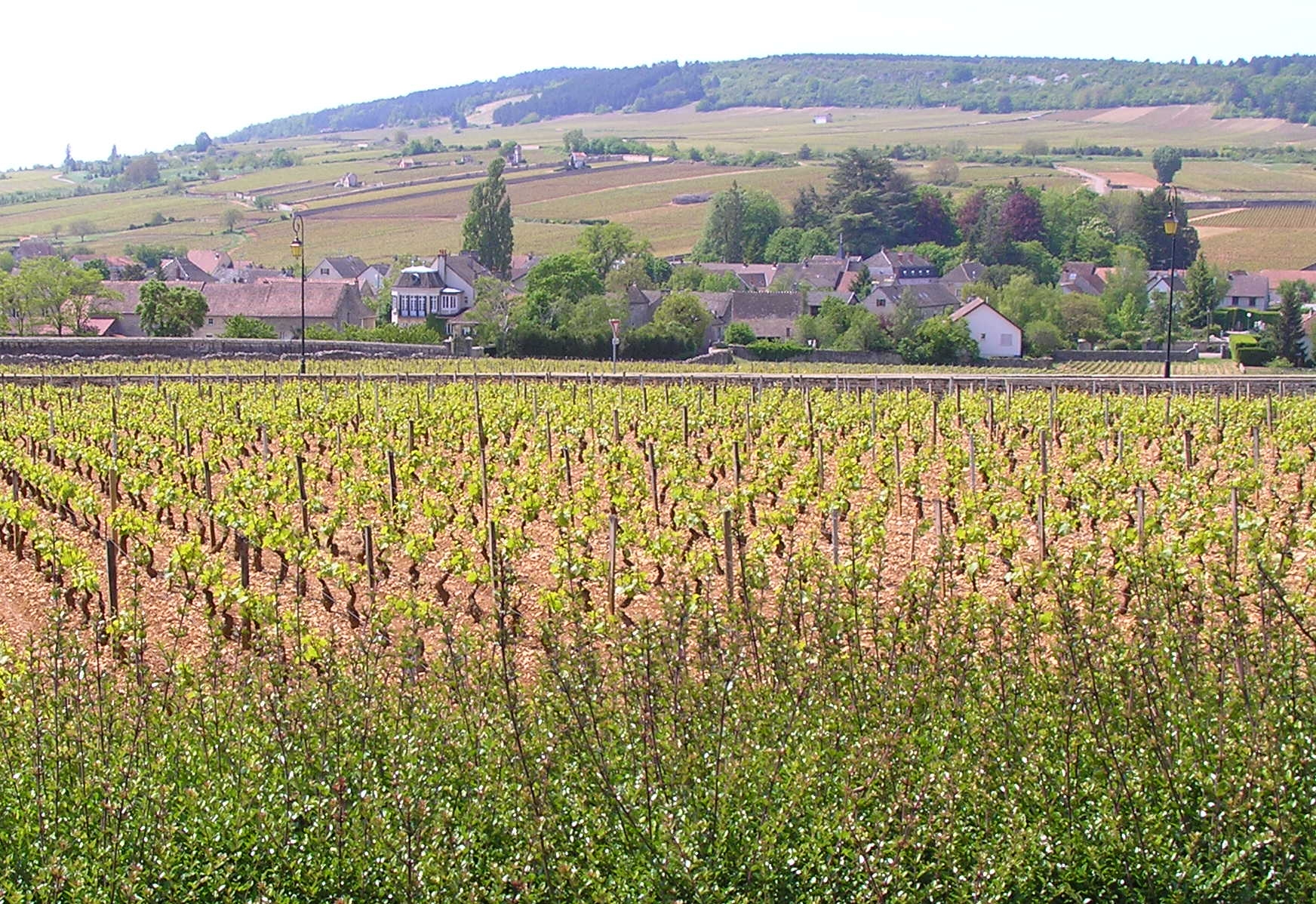
The next major region is the place dreams are made in Burgundy.  It is a region (AOP) with small hills or Cotes.  They used to be called the Cotes d' Orient because they point in that direction, however, as my teacher said in class, they have since dropped the "rient"  Now the hills are referred to as the Cote d' Or.  (Hills of Gold)  Likely the "rient"was dropped due to someone having great insights into marketing.  Who doesn't want to drink wine from a place called the hills of gold?  I certainly do.  The truth is, during great growing seasons, many a person would rather have a great Burgundy from this area than a brick of gold.  The Cote d'Or is broken into two parts.  In the north, and pictured above, is the Cotes de Nuits, which produces almost exclusively red wine, and almost exclusively made from the noble grape Pinot Noir.  In the South is the Cote de Beaune which produces some lighter reds higher in acid, as well as most of the fine whites from the area.  The hills here are mad up of limestone and the higher on the hill one goes, the more limestone.  As you get to the bottom of the hill you would fine higher amounts of clay.  Also, because soil is only one parameter, and weather and sun is so important in a cold climate, the spots on the hill that are grand cru, maximize sunlight.  therefore, grapes grown in the grand cru spots on the cote, are given the best chance to mature year in and year out based on the vines' exposure to the sun.  The people of Burgundy take place one step beyond terroir.  They talk about climat, a Greek word describing not only the place, but also the environment. 

Back to Burgundy...  We will start with the Cotes de Nuits, which as I mentioned mostly produces Pinot Noir based red wines.  You can remember this because Nuits means night.  Dark wine...Night... Ah, you are with me now.  A special thank you to my French speaking wife for that memory device.  I am not sure it will help me since it now requires that I learn and retain Nuits=Night, and that Night equals Red wine, but if it helps you, I am glad.

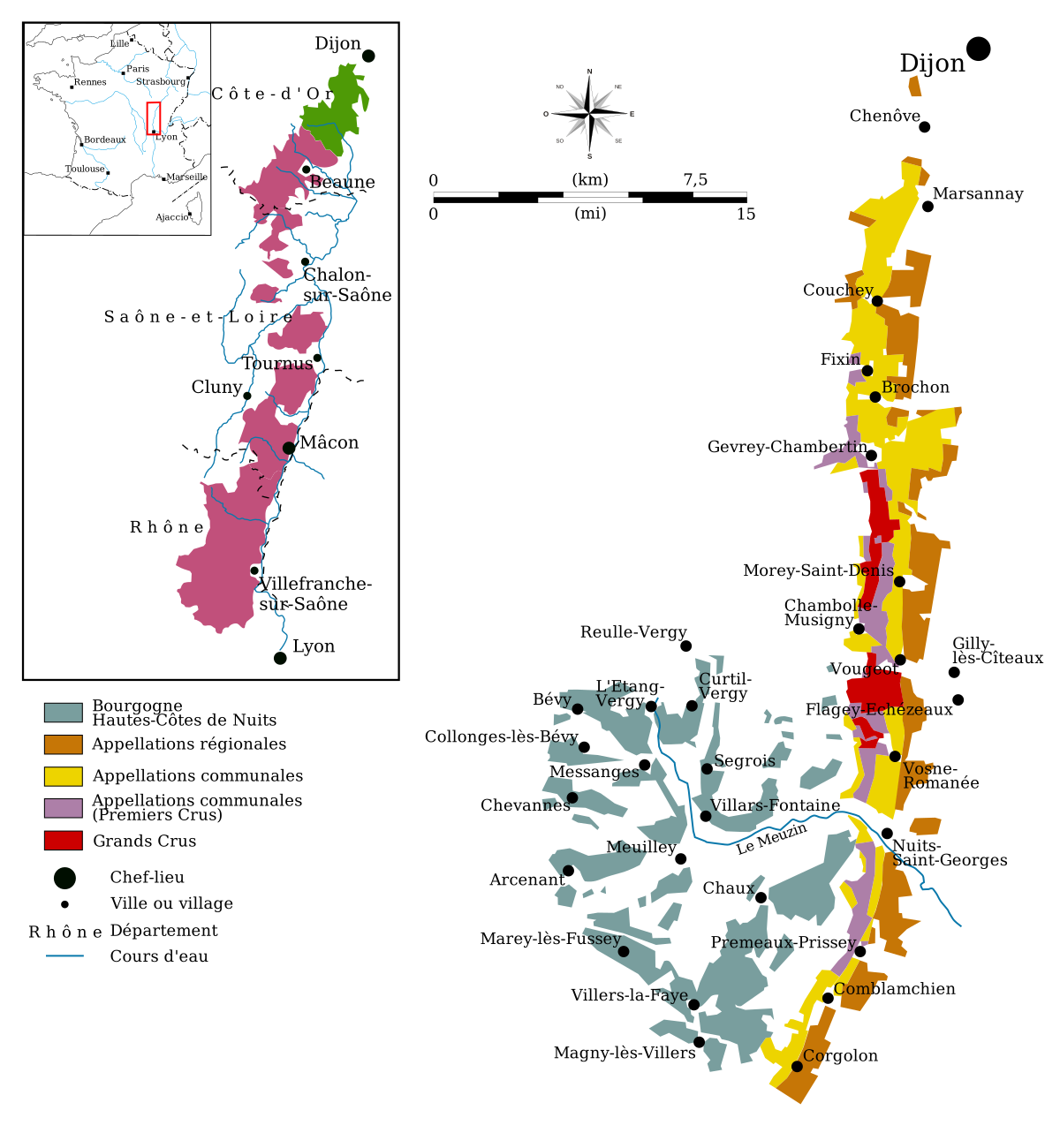
The Cotes de nuits is made up of 14 sub appellations or communities, making it more difficult to understand.  These can be seen on the map to the right above.  Everything between Dijon and Nuits-Saint-Georges is a part of the Cotes de nuits.  You will note that a lot of towns are hyphenated.  This is because the town was unknown, but the grand cru wine produced in that town was well known.  The first word is the name of the town originally, and the second is the name of their most famous grand cru wine.  (Marketing yet again)  6 of the 14 communities have all 24 grand cru locations, so we will focus on those spots for the sake of space and time.  They are the village of Gevrey-Chambertin (Masculine wines) (9 Grand Cru vineyards-Le Chambertin, Chambertin-Clos de Beze, Mazis-Chambertin, Chapelle-Chambertin, Charmes-Chambertin, Mazoyeres-Chambertin, Griotte-Chambertin, Latricieres-Chambertin and Ruchottes-Chambertin).   

Morey-St-Denis  (Masculine wines) (5 Grand Cru Clos de la Roche, Clos St. Denis, Clos des Lambrays, Clos de Tart and Bonnes Mares which it shares with the village of Chambolle-Musigny) 

Chambolle-Musigny  (elegant wines) ( 2 Grand Crus Bonnes Mares and Musigny as well as its several high quality premier crus)
Vougeot (Full bodied) (1 Grand Cru Clos de Vougeot). 
Vosne-Romanee(Round velvety wines) (6 Grand Crus Romanée-Conti, La Tâche, Richebourg, La Romanée, Romanée-St. Vivant and La Grand Rue).  
Flagey-Echezeaux  (2 Grand Crus Grands Echézeaux and Echézeaux). 
Cote d' Beaune  is the southern most regions of the cote d' Or.  As I mentioned above, this region makes both white and red wines. 
The map above includes the Cotes de beaune which is the strip of land between Beaune and the Dheune river in the south.  This strip is just south of the cote de Nuits.  The reason for the white and red is that there is large variability of terroir in the Beaune.  This is the land of famous white burgundy from places like Mersault and Chassagne-Montrachet.  Both the north and southern most regions of the Beaune produce some pinot Noir based reds as well due to changes in Terroir mentioned above.

Again, there are so many AOPs in the region that we will focus on the ones with Grand Crus.  Remember that like other regions, and maybe even more so, you can find fantastic wines outside of the grand crus, but it is too much to cover and my fingers are starting to hurt from typing.

The first stop is Pernand-Vergelesses (1 grand cru shared Corton-Charlemane)  The second is Ladoix-Serrigny (Also contains part of Corton-Charlemane).  
The next is Corton-Aloxe which has the only Grand Cru (Aloxe) red in the Beaune, and I am thankful since I have a 2008 sitting in my basement waiting to be enjoyed currently.  Additionally they have Corton-Charlemane for whites as well).  There are many 1er cru from the area to the north of Cotes d'Beaune, but those are the only grand cru.

The South houses the preferred communities.  I wills start with one near and dear to my heart, because the first white burgundy I have tasted came from this village.  Mersault has no grand cru.  Why talk about it?  It produces some of the best white burgundy in the region according to some.  It has a honeyed flavor with butter and a bit of nuttiness with age.  Debates have raged on whether Les Perrieres should be elevated.  

Puligny-Montrechet (3 grand Crus La Montrachat, Montrachet, and Bienvenues-Bâtard-Montrachet) also contains "scabby hill" one of the most famous vineyards in the world.  I call it out mostly because i like the name (Mont Rachaz).  

Chassagne-Montrechet shares La Montrachat, but also has Bienvenues-Bâtard-Montrachet. These are whites that greatly benefit from aging.  
I count 6 total grand cru in the Cote de Beaune.  
If you are confused, it is likely because I am as well.  This is a bit overwhelming to say the least.  If I messed something up, please let me know because I am going to have to take a test on this at some point, and I need to know if I am wrong. 

The last two regions worth noting in the area are Cote Chalonnaise and Couchois as well as Maconnais.  Cote Chalonnaise has Aligote wines in Bouzeron and Gamay in other areas.  this is a lesser area of Burgundy. 

Maconnais used to be Gamay country, but now is over 80% Chardonnay.Pouilly-Fuisse is located in Maconnais, a wine that you can find at most supermarkets, and became popular in the late 1970s.  

Technically part of Burgundy is Beaujolais.  Beaujolais has 13 appelations.  There are 10 Crus AOP:  St Amour, Chenas, Julienas, Moulin a Vent, Fleurie, Chirouble, Morgon, Regnie, Brouilly, Cotes de Brouilly.  Beaujolais-Village AOP, and Beaujolais AOP are the ways that you will see the wines labled.  Cru is the best.  Villages are next, with Beaujolais AOP being the more rustic version of the wine.  Gamay is the grape of choice in the region.  Once a year you will also see Beaujolais Nouveau, which frankly gives the wine its bad name.  It is bad.  I have had it for several years, and decided that I don't need to drink it anymore.

Beaujolais at its best will taste like a great Pinot Noir.  These wines are built to last 10-15 years and some last up to 20.  They have floral aromas, spice, Morgon makes perhaps the best and most rich Cru Beaujolais with Cote Du Py being the best of what Morgon has to offer.  These are NOT Beaujolais Nouveau, and should be tried.

Next week we will talk bubbles.  Stay tuned.